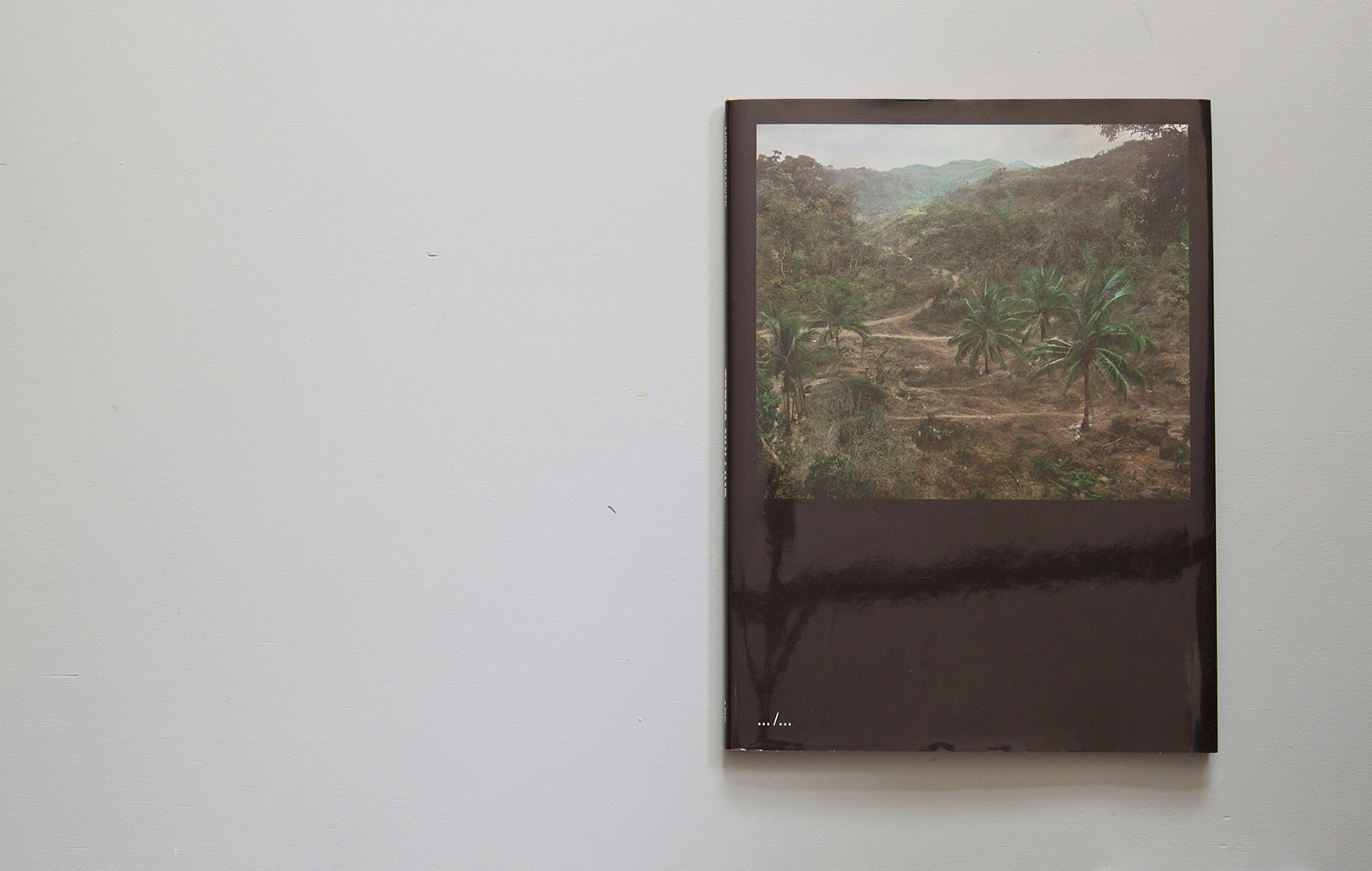
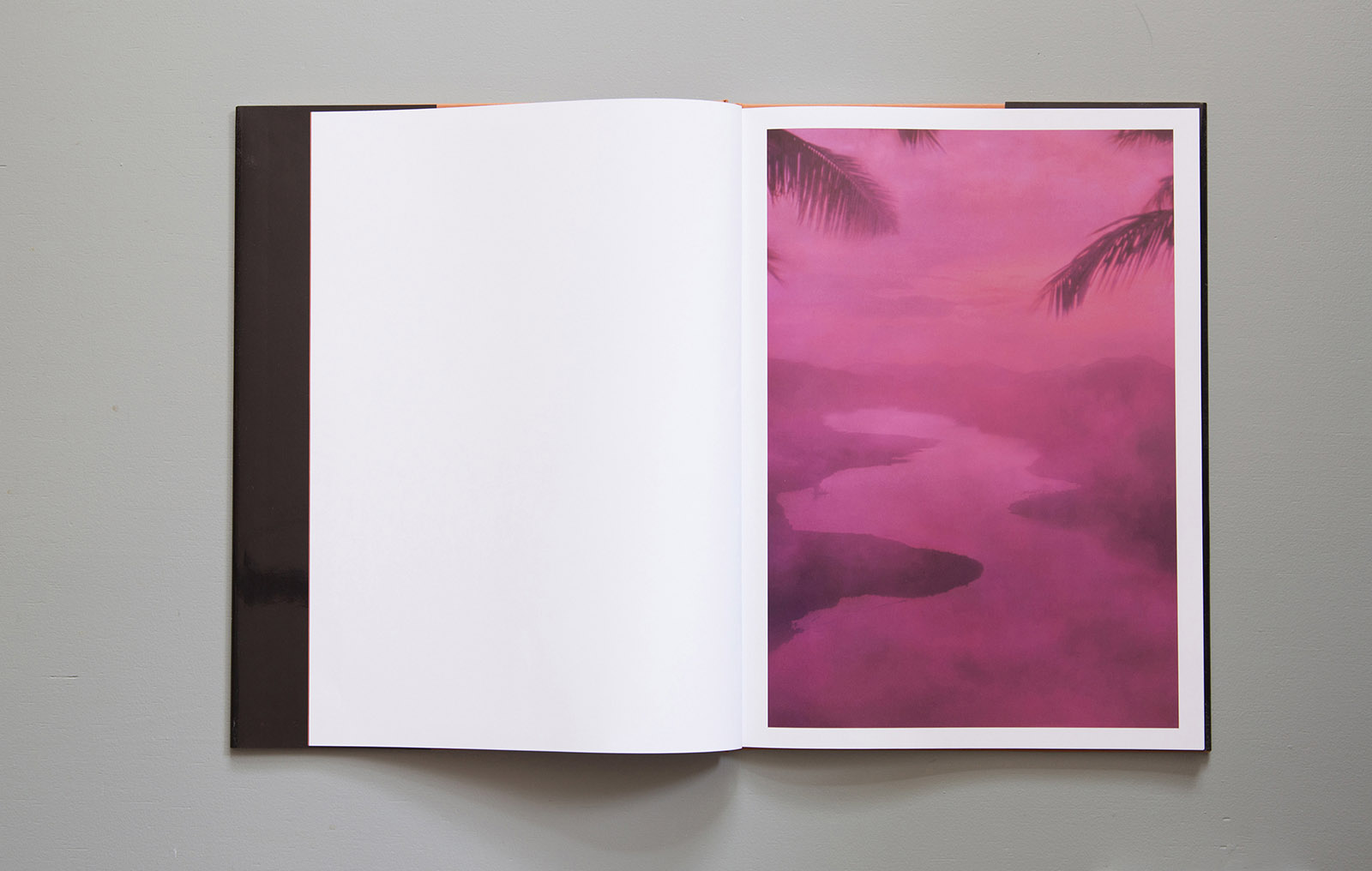
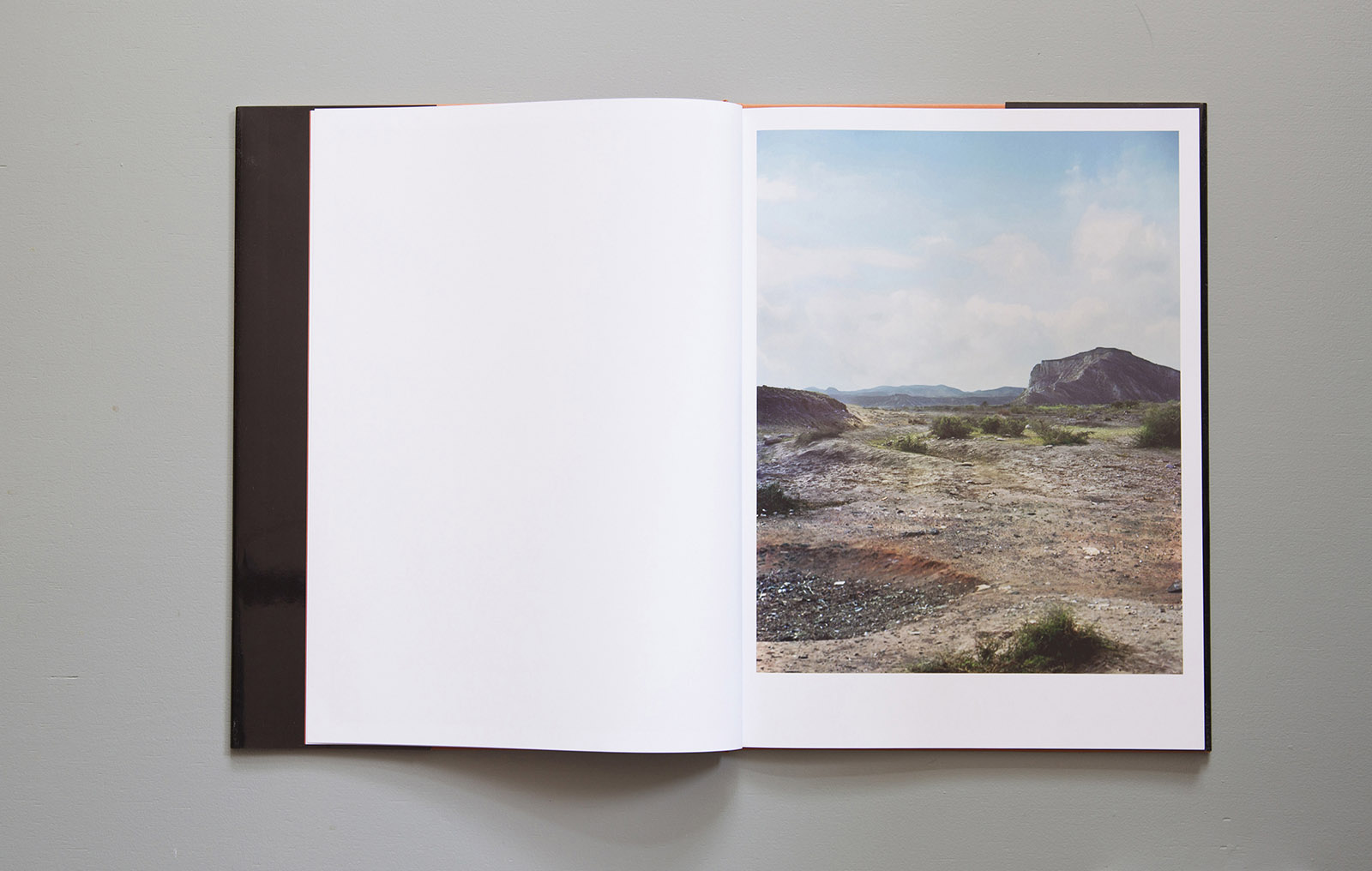
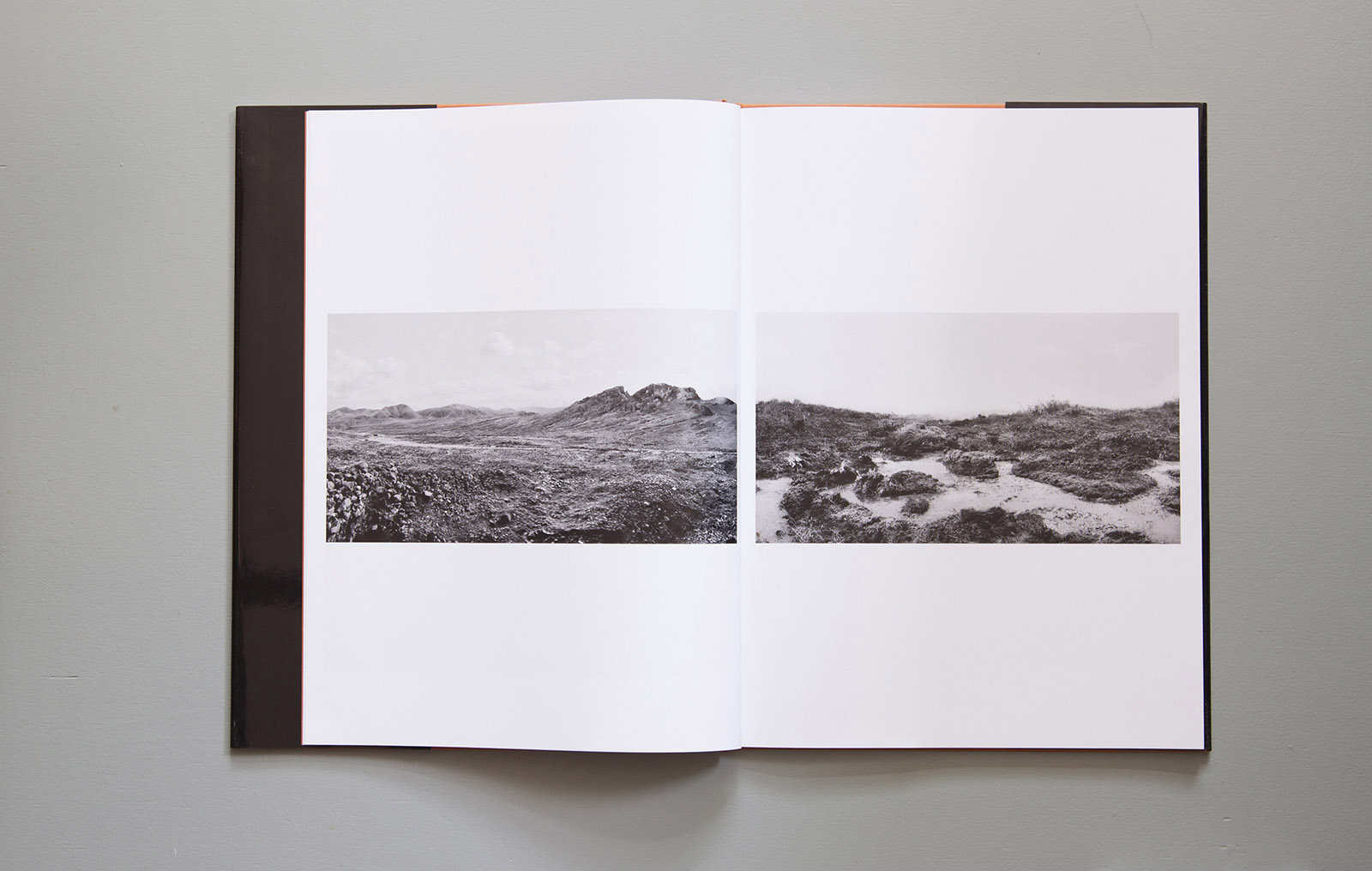
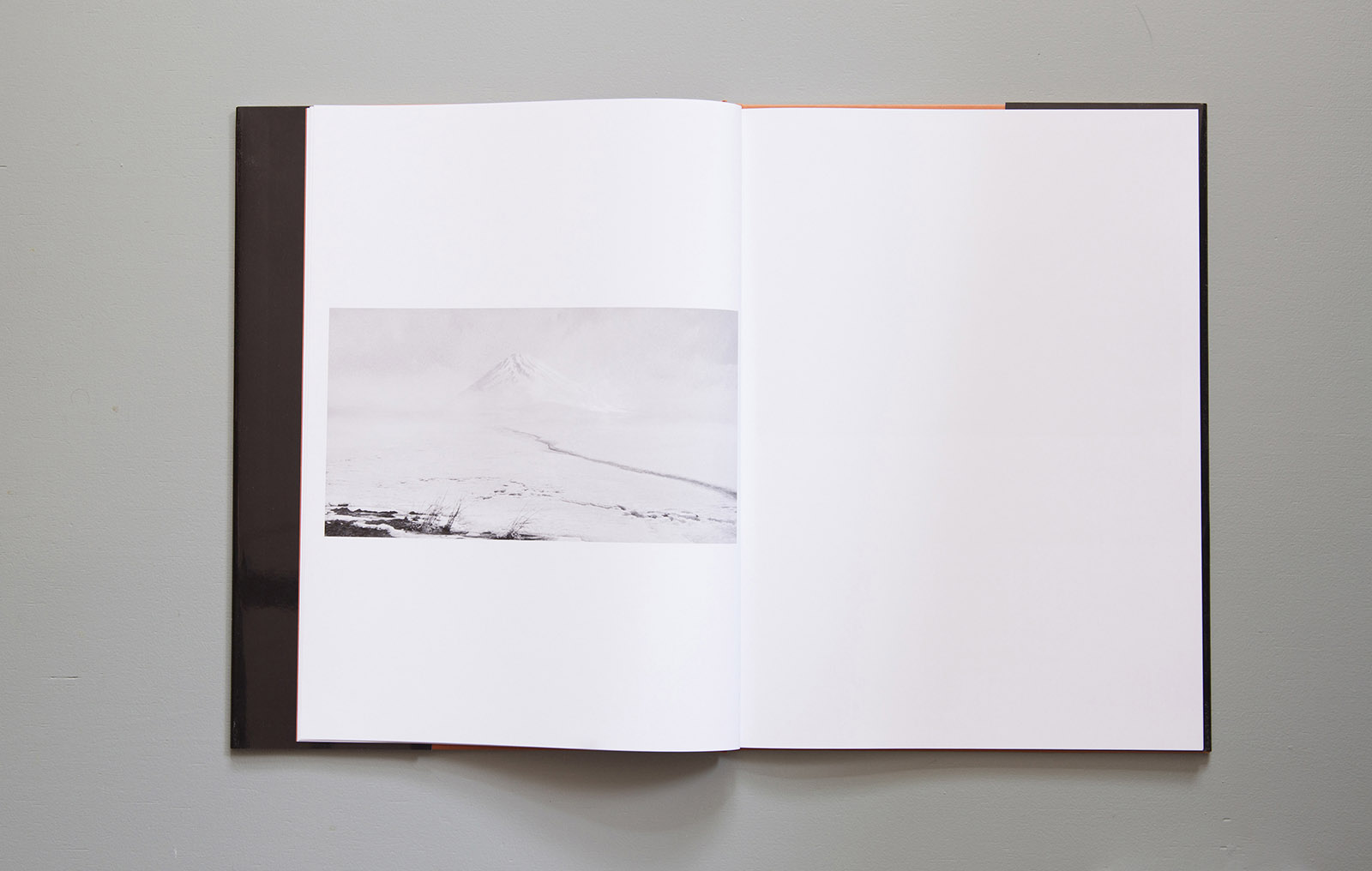
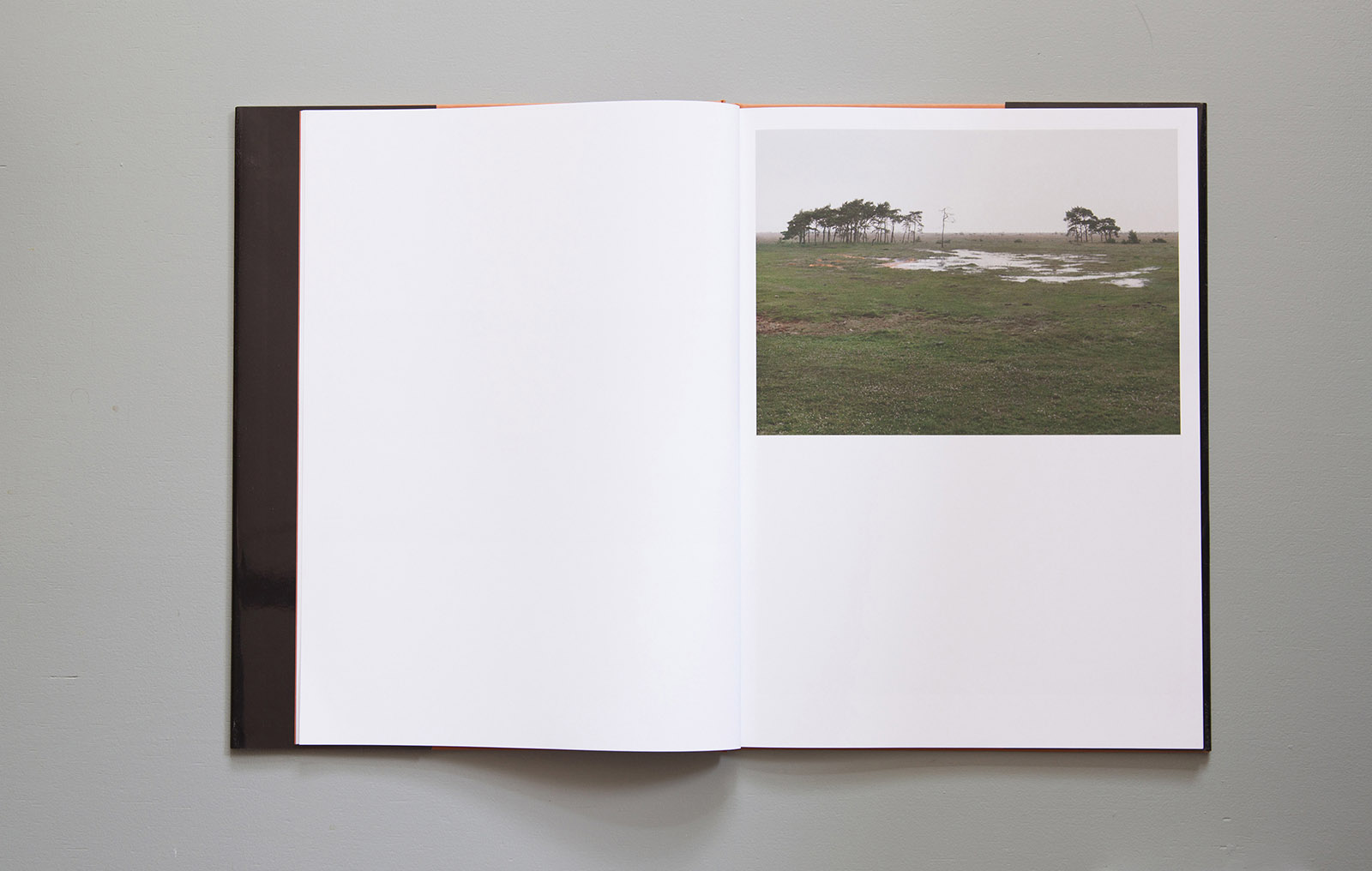
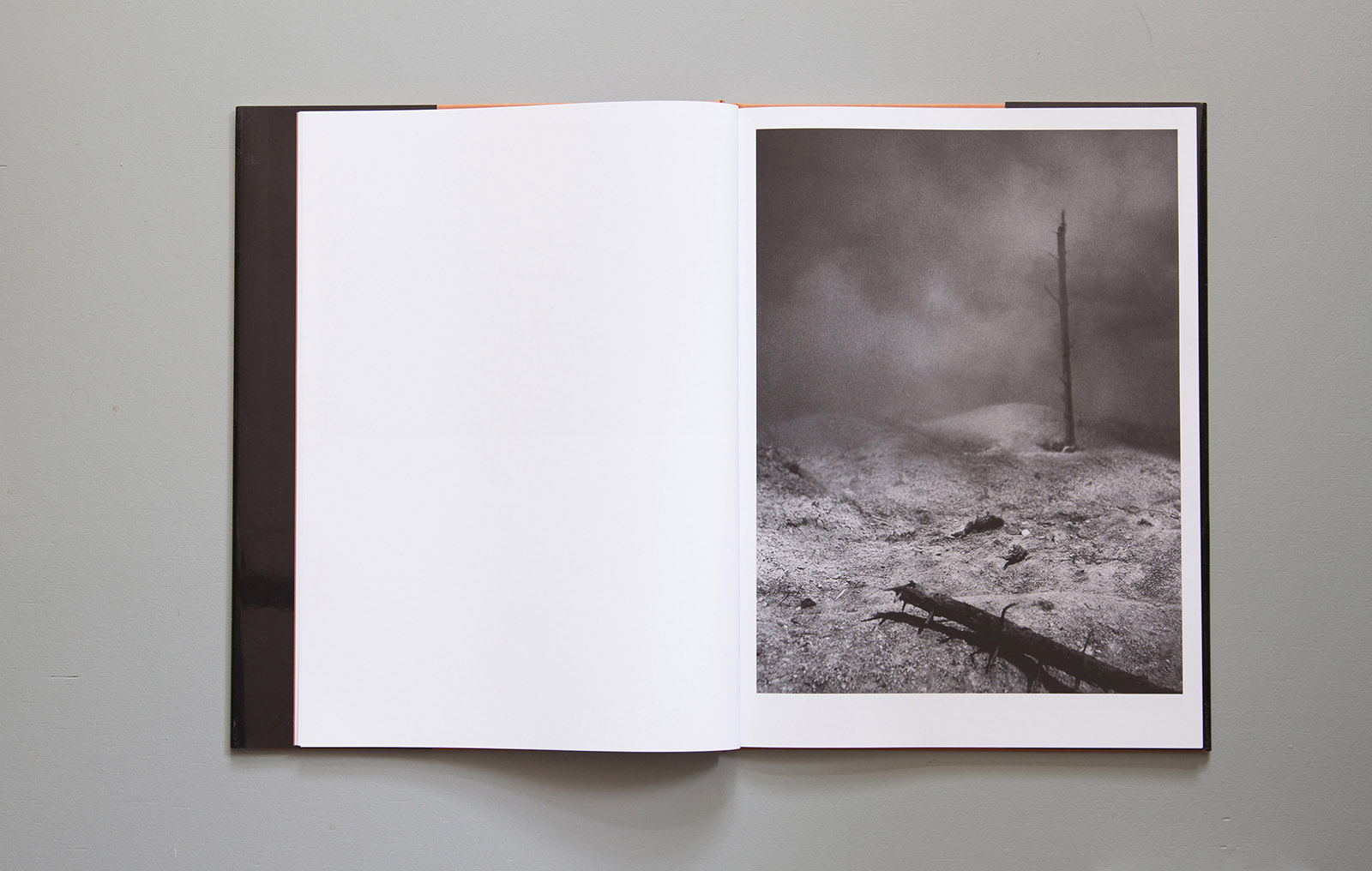
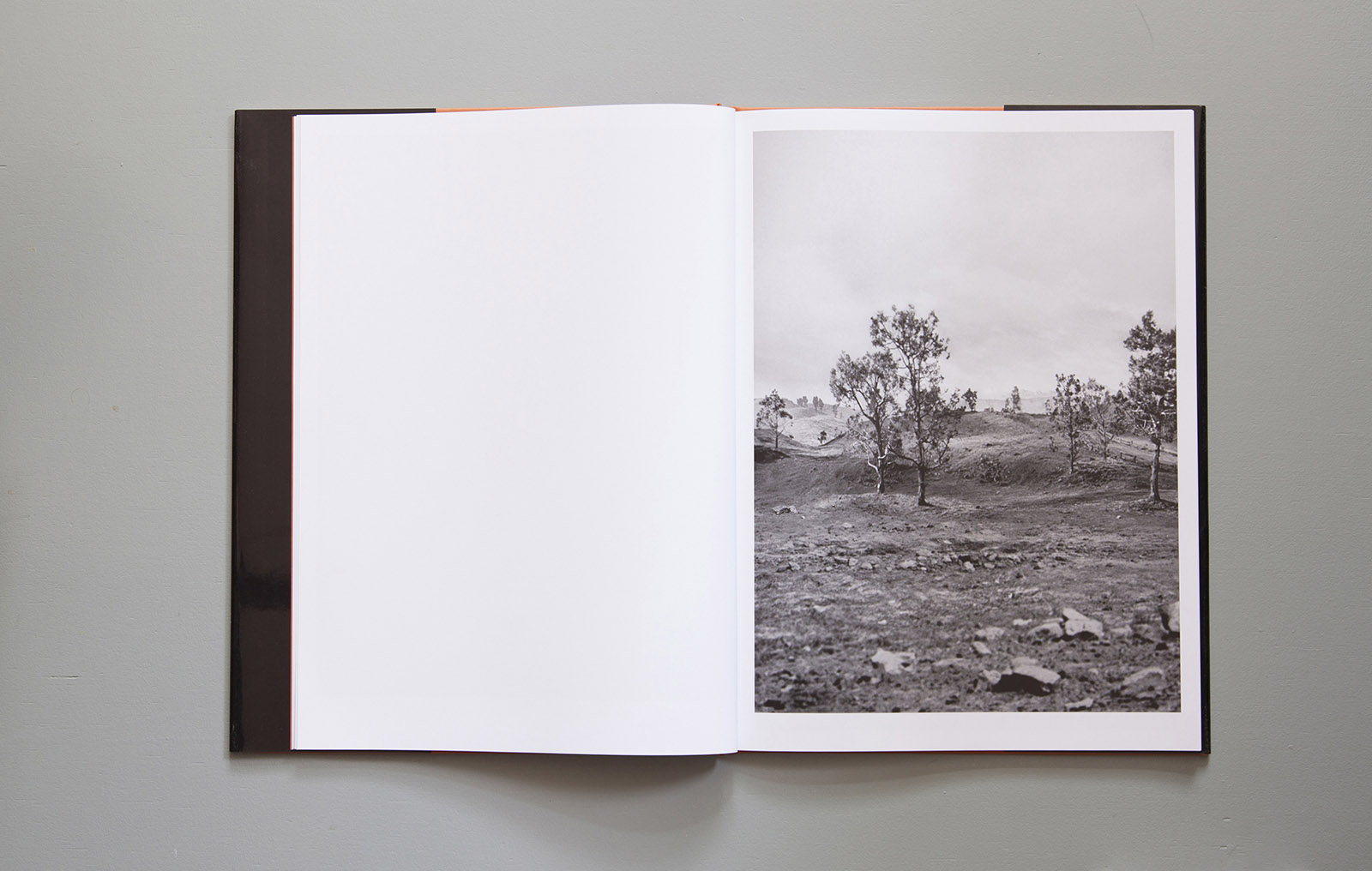
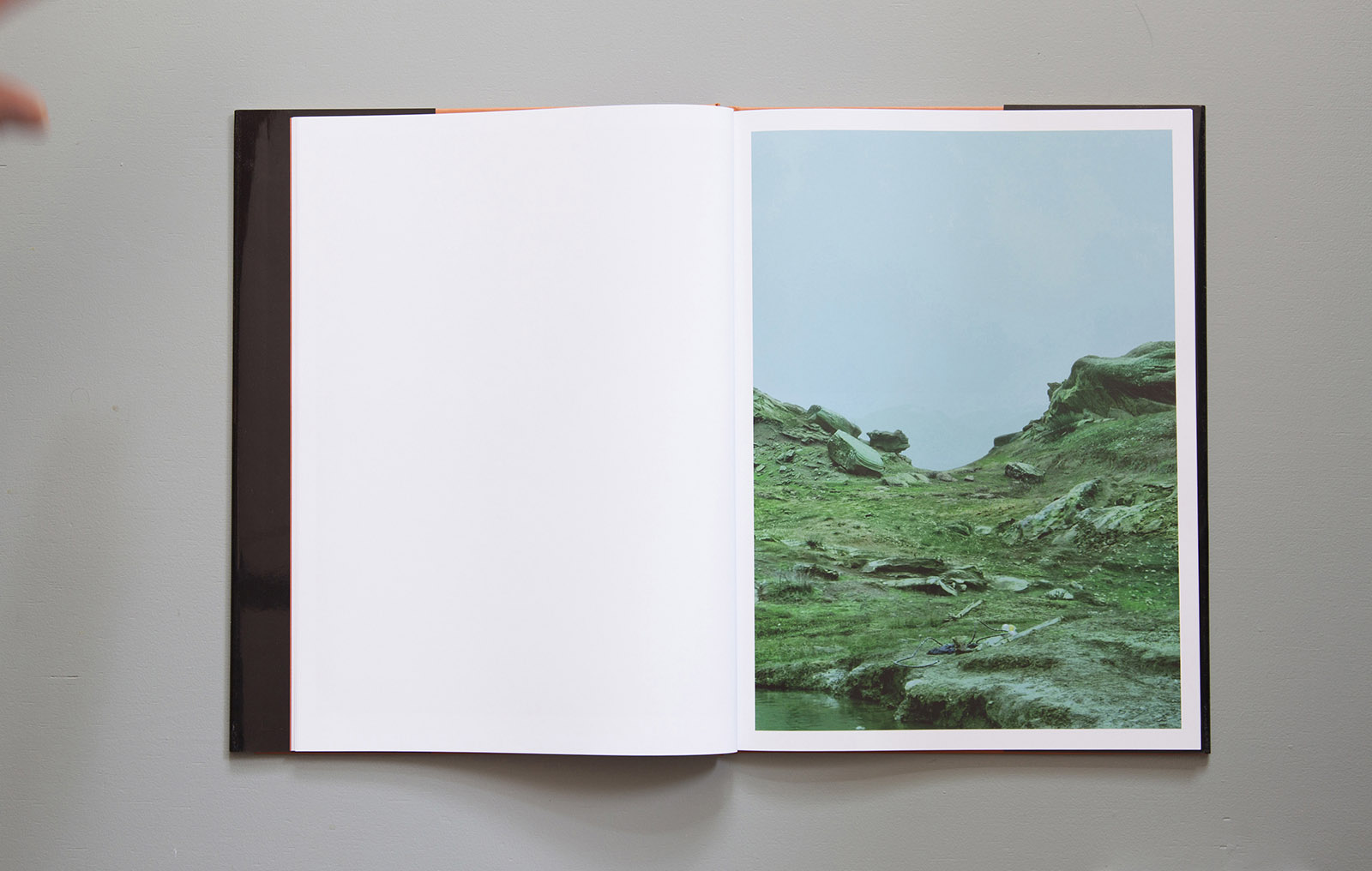
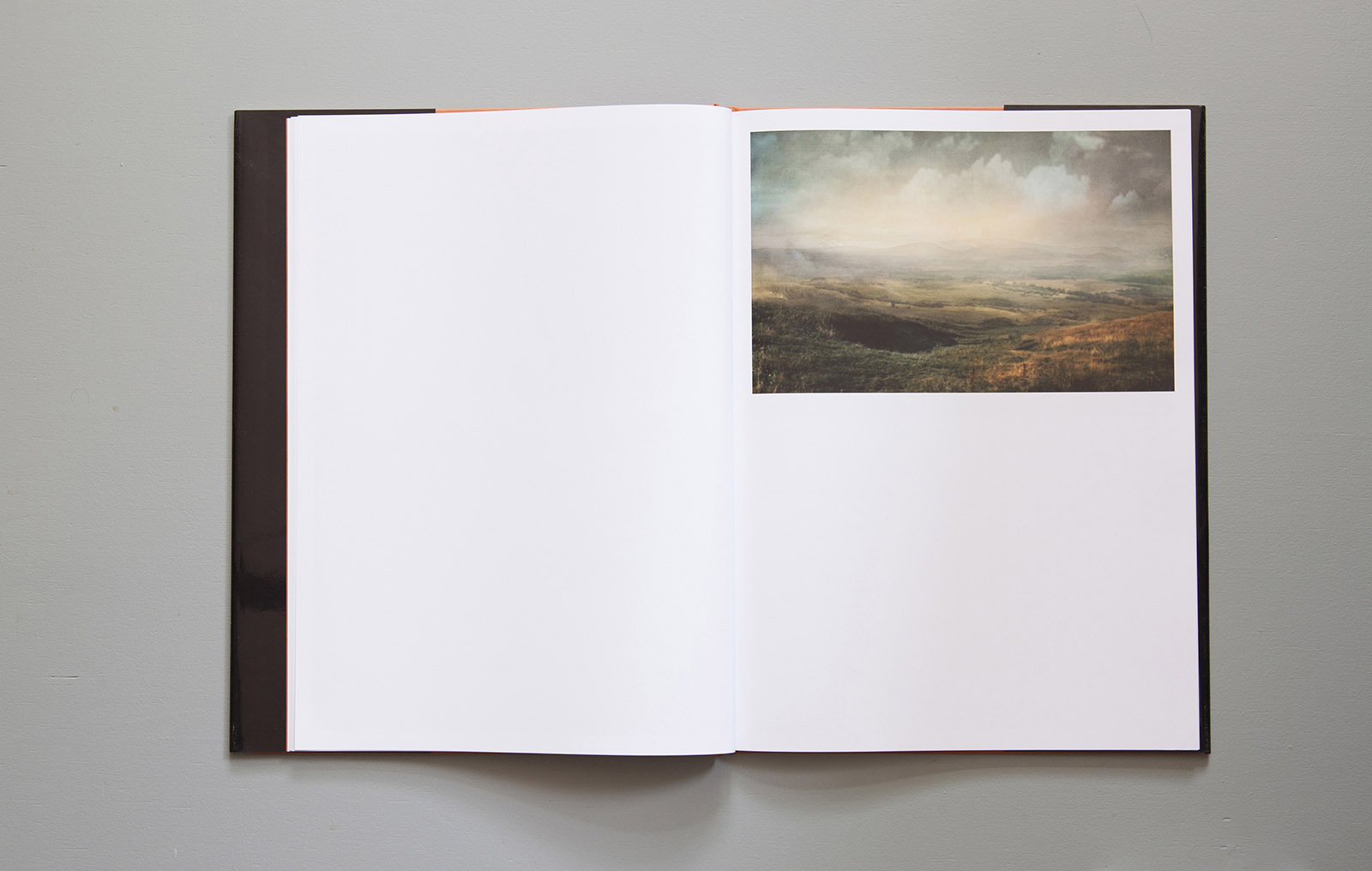
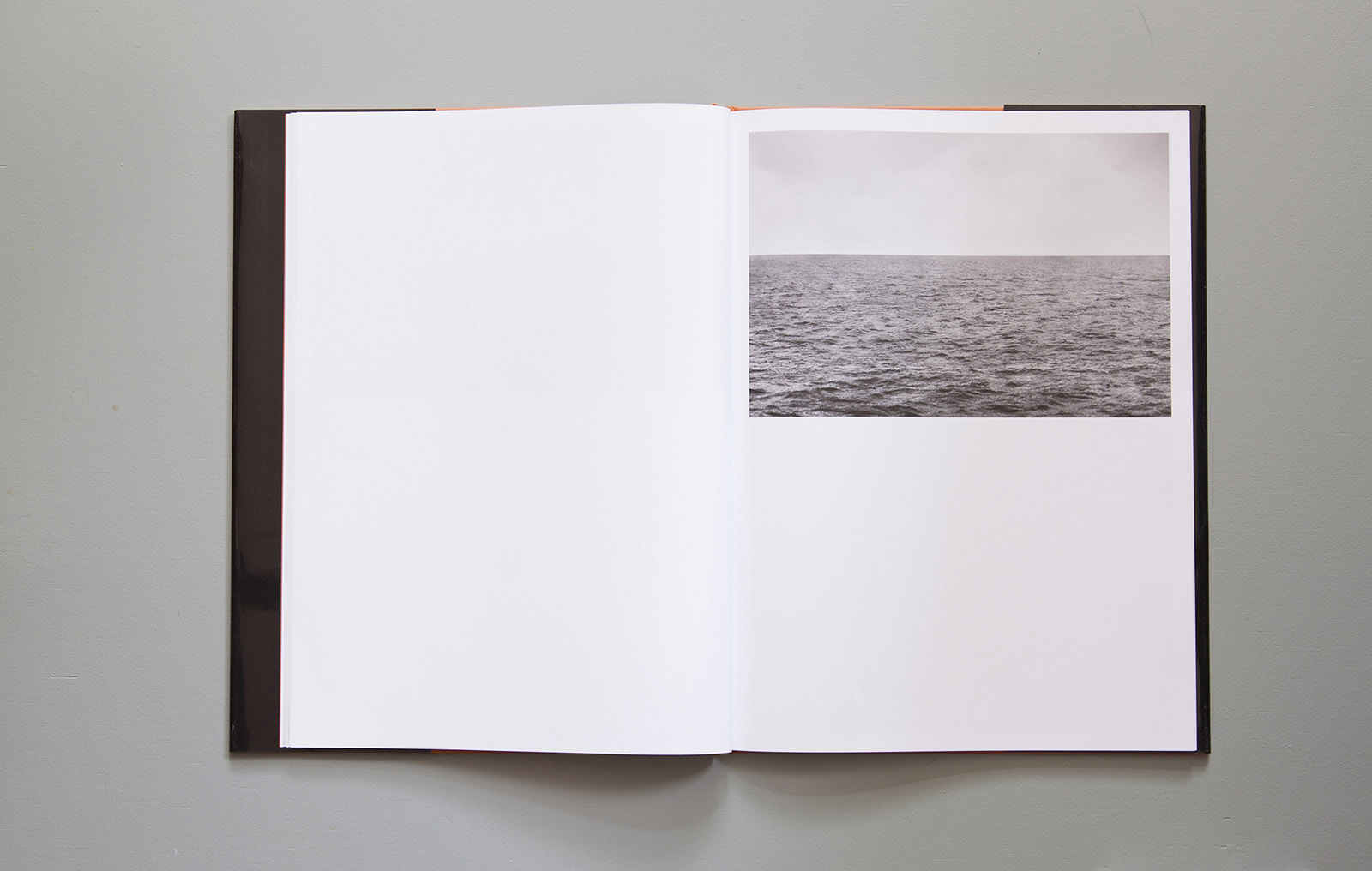
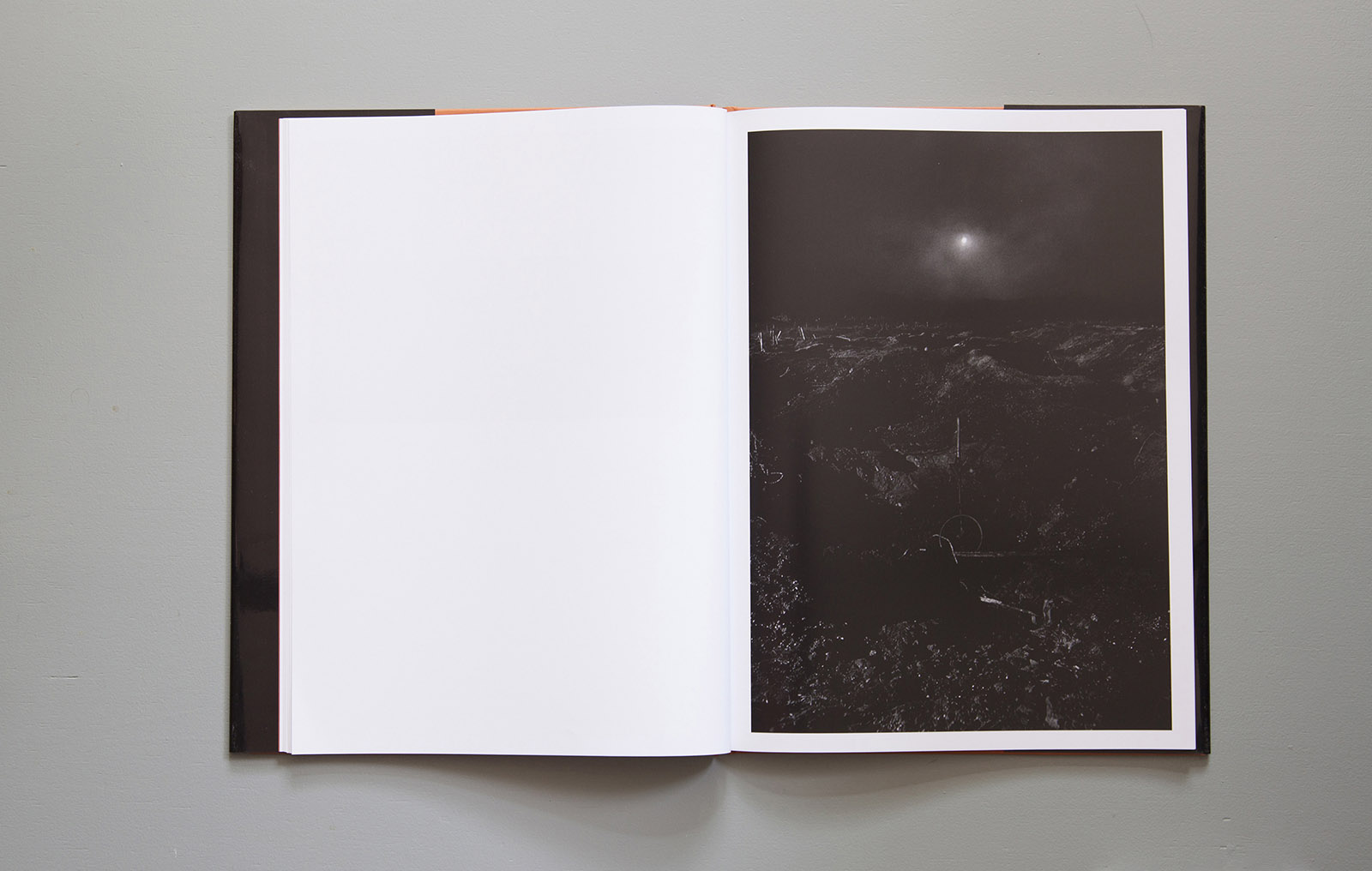
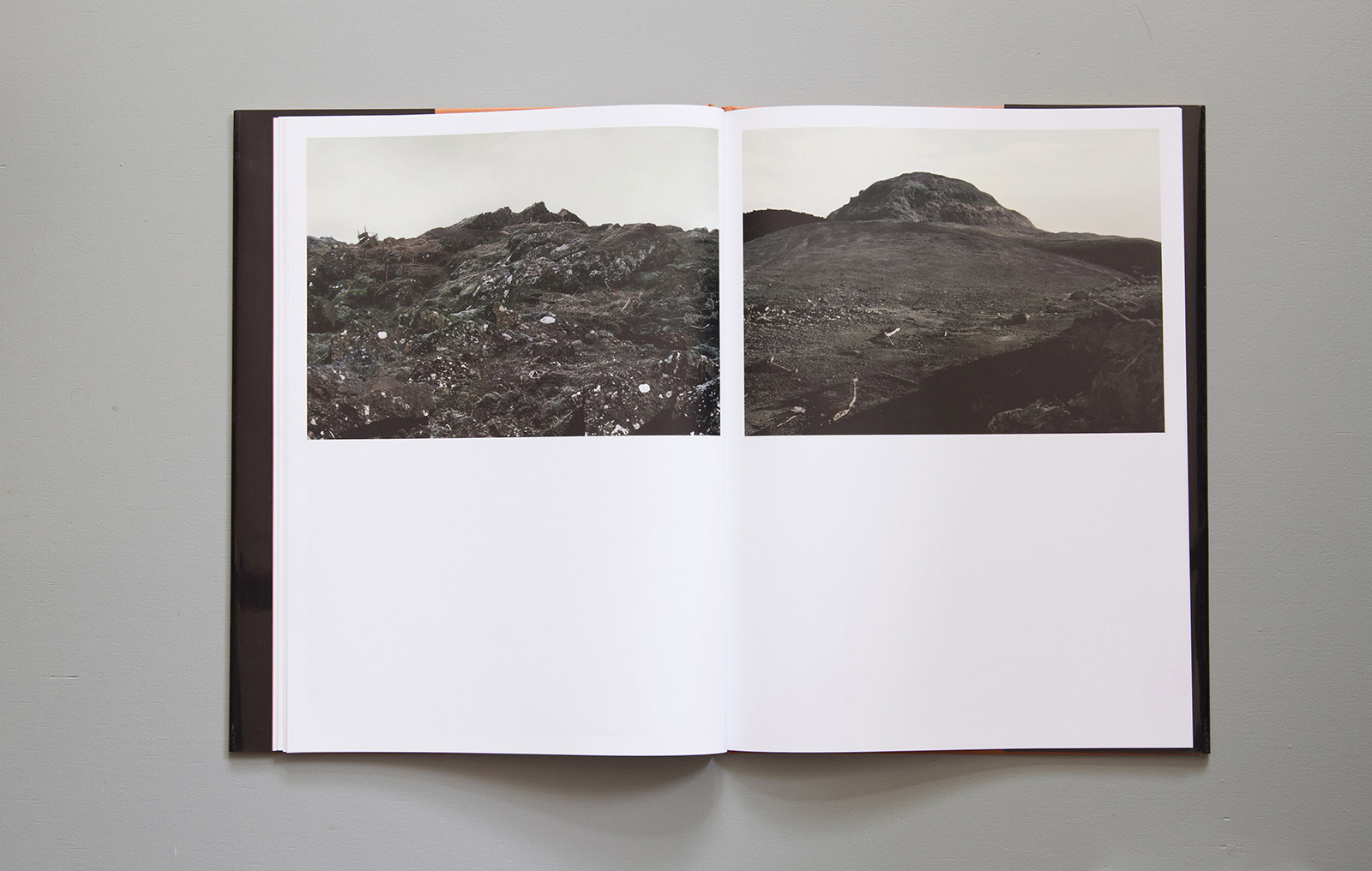
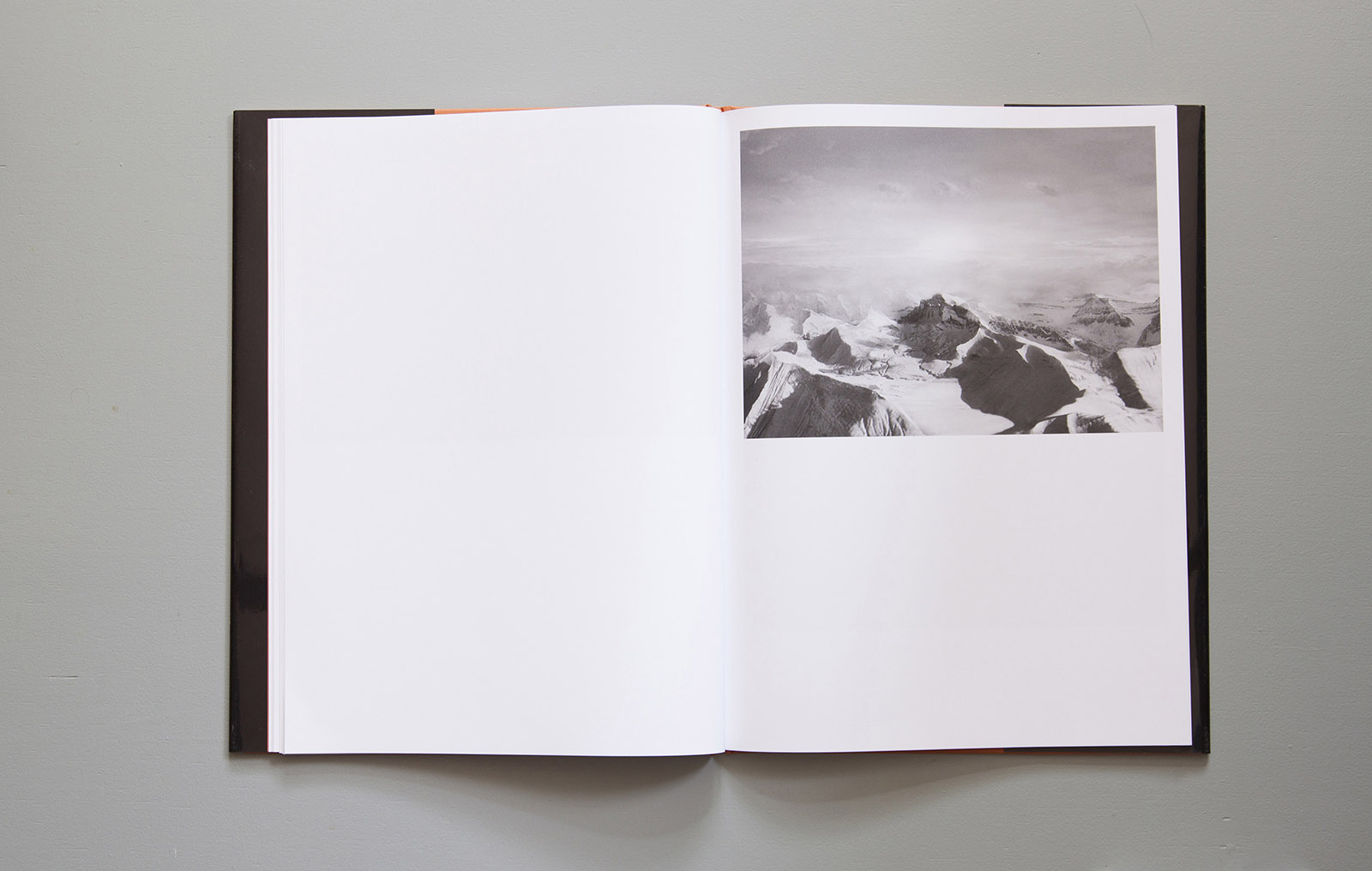
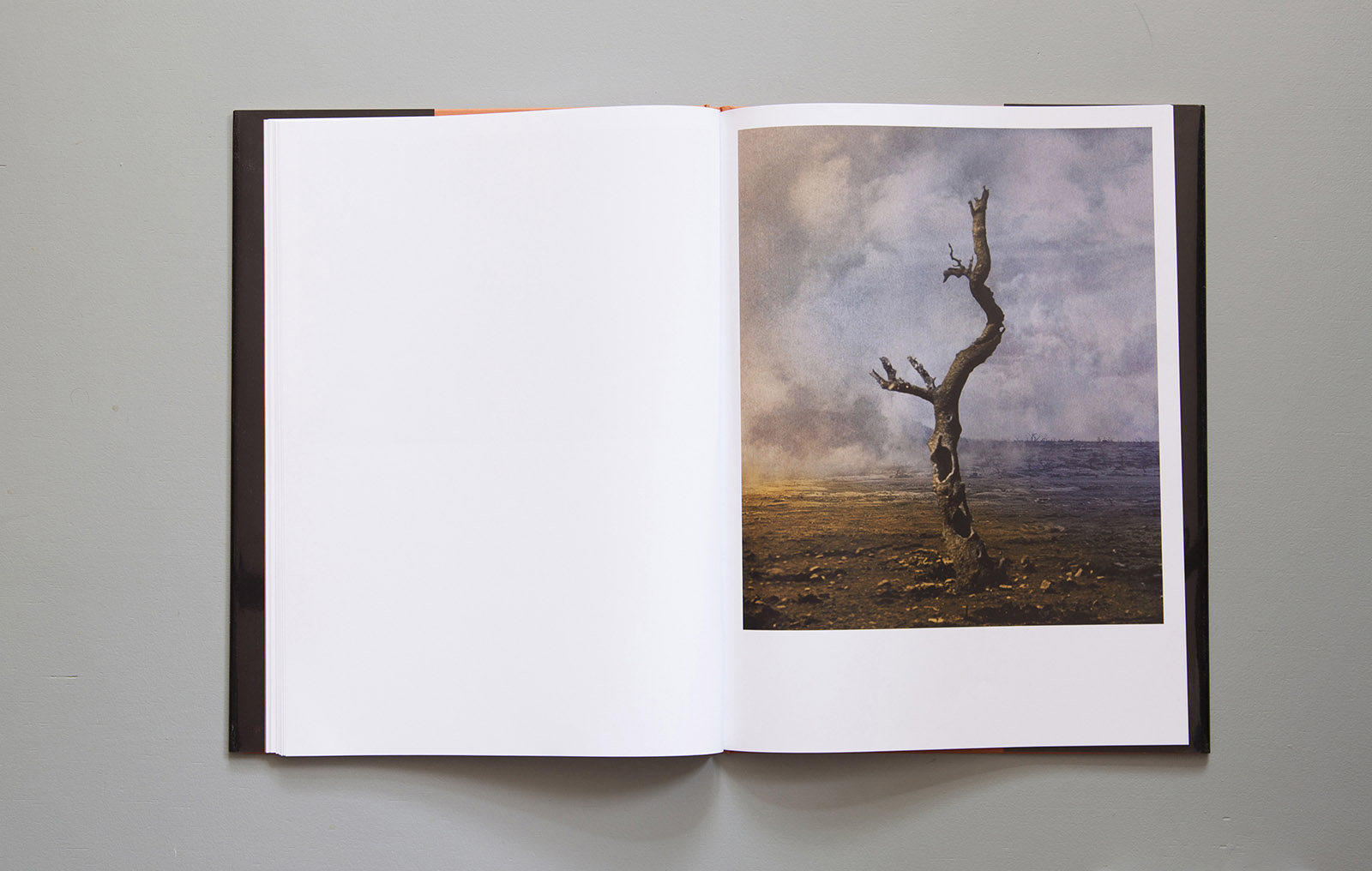
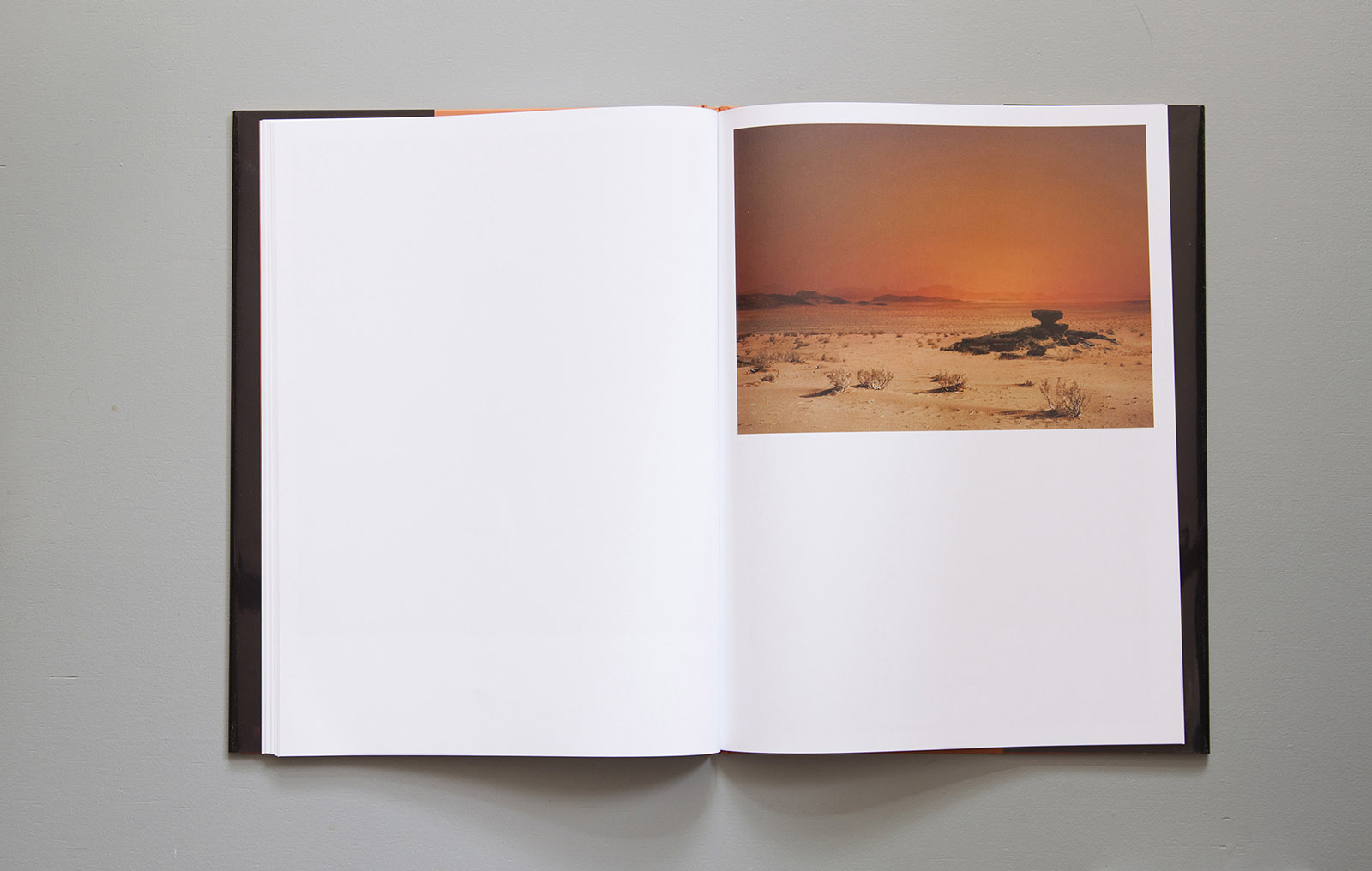
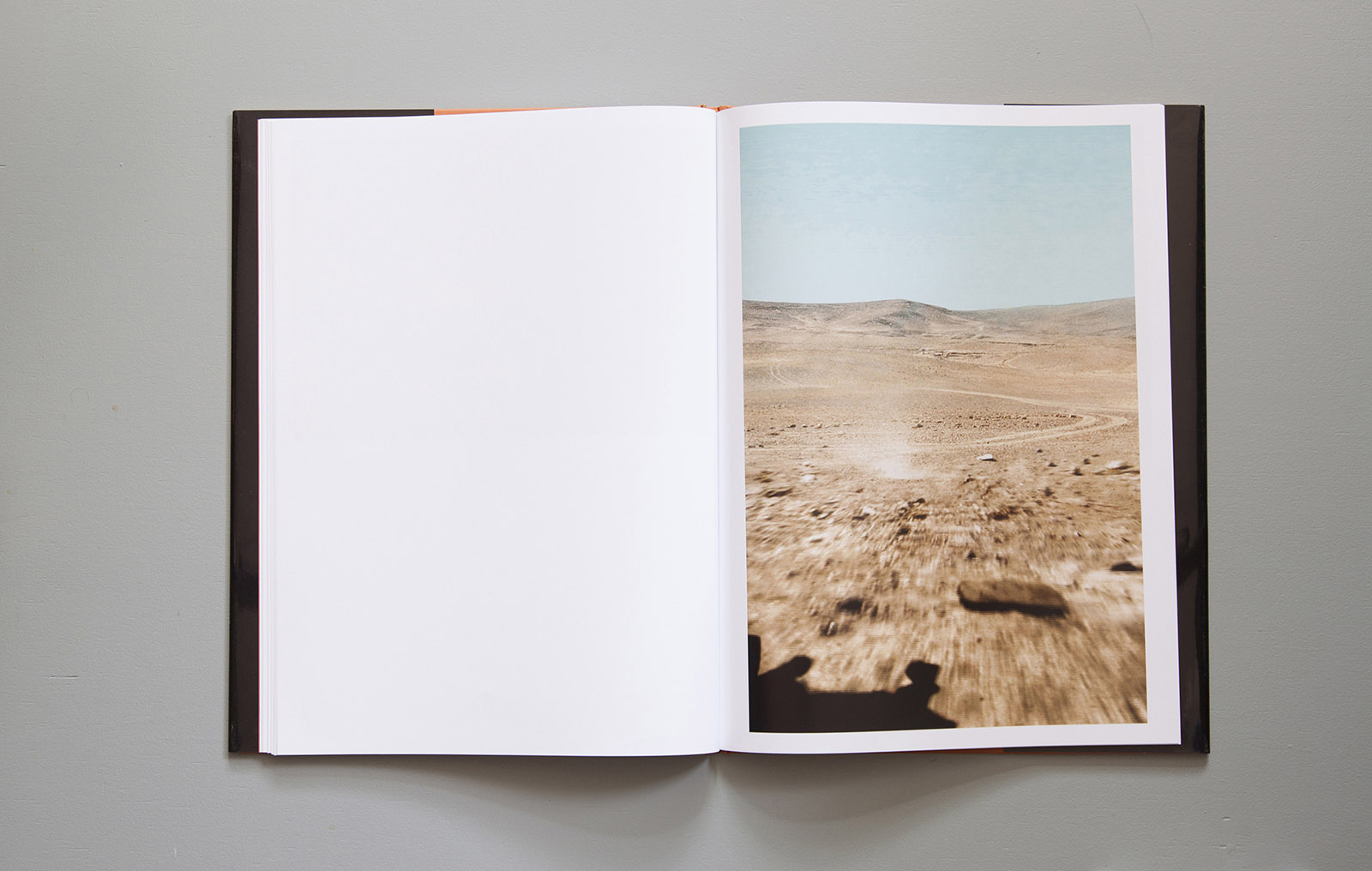
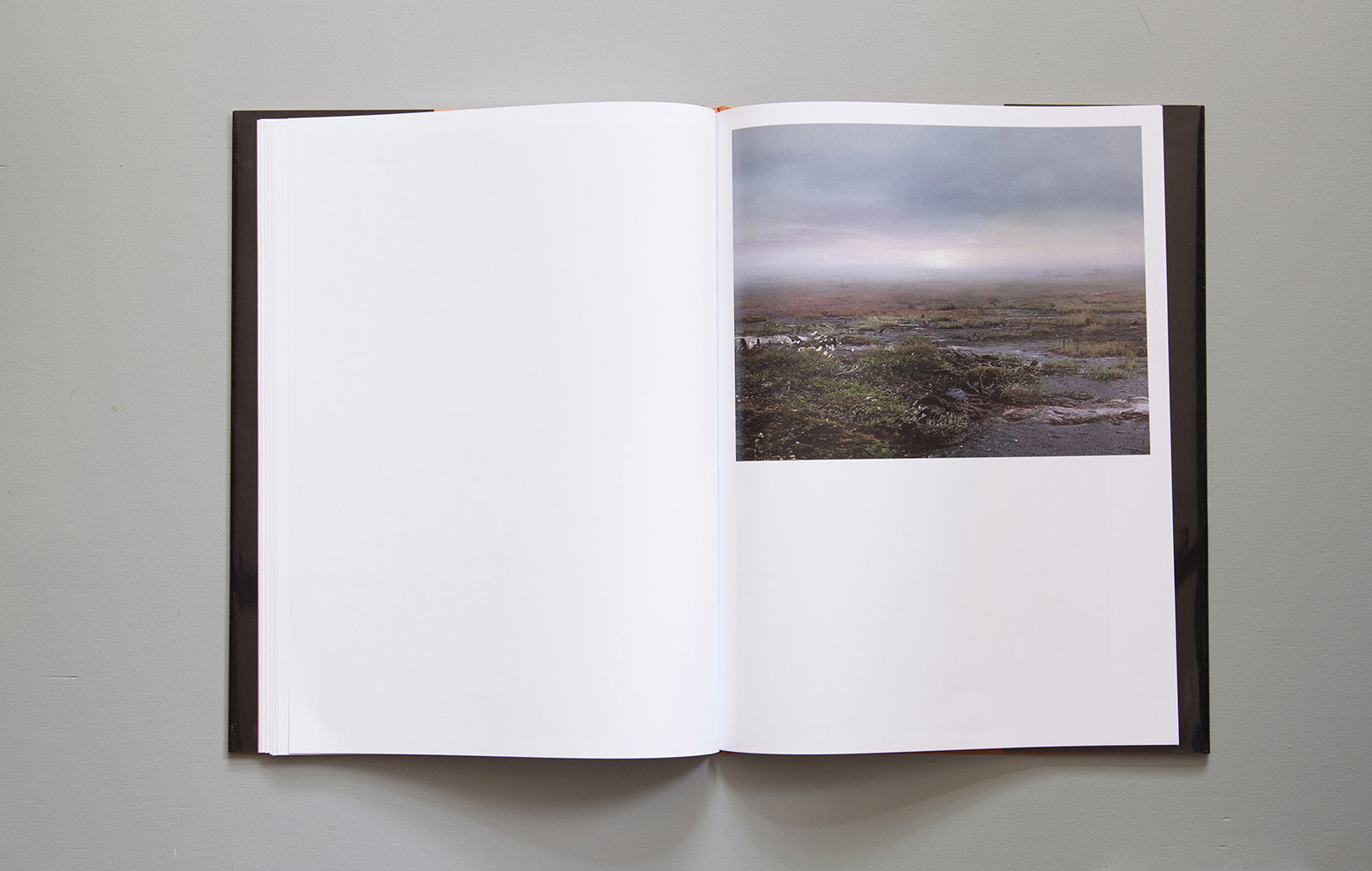
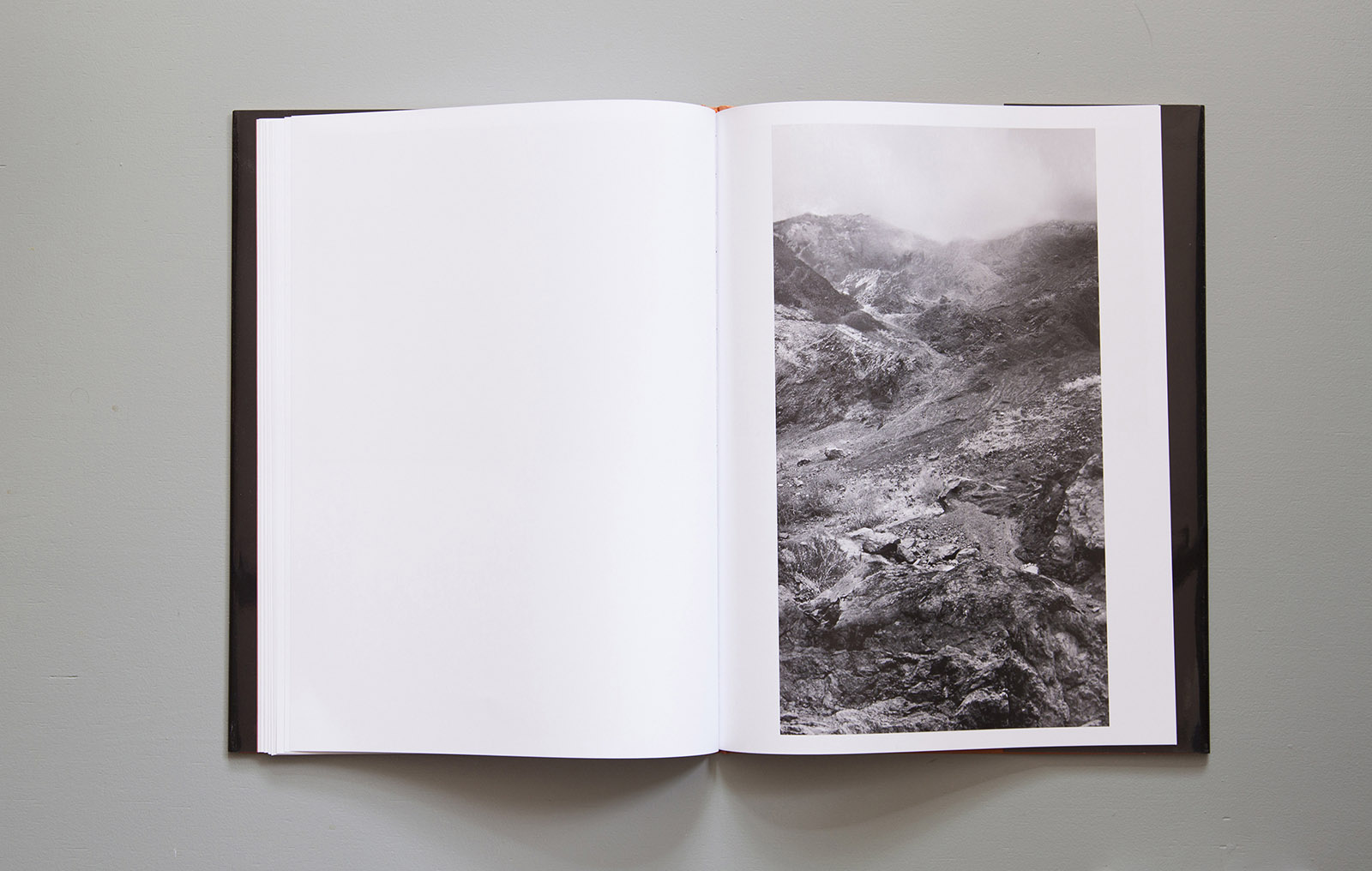
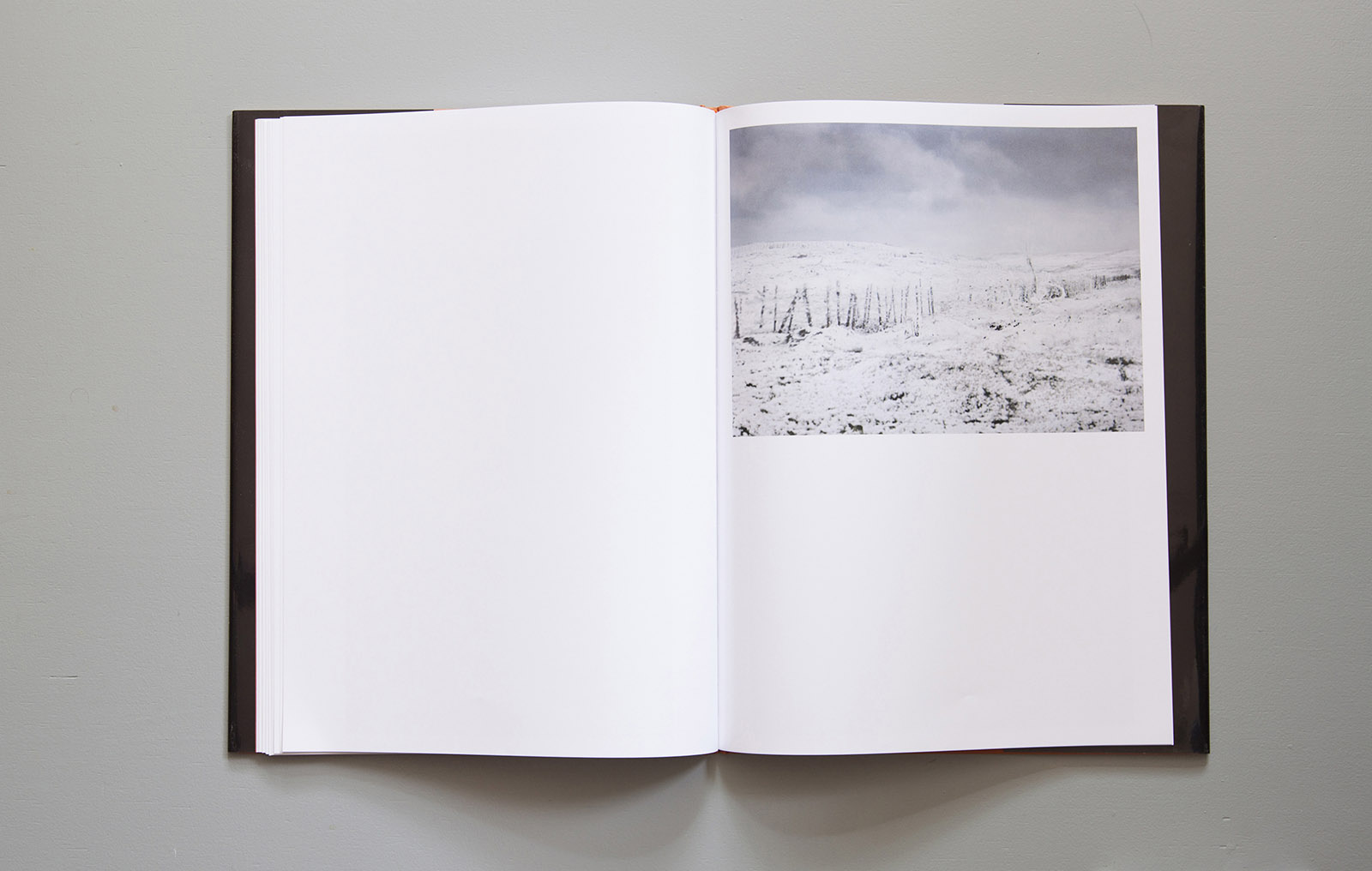
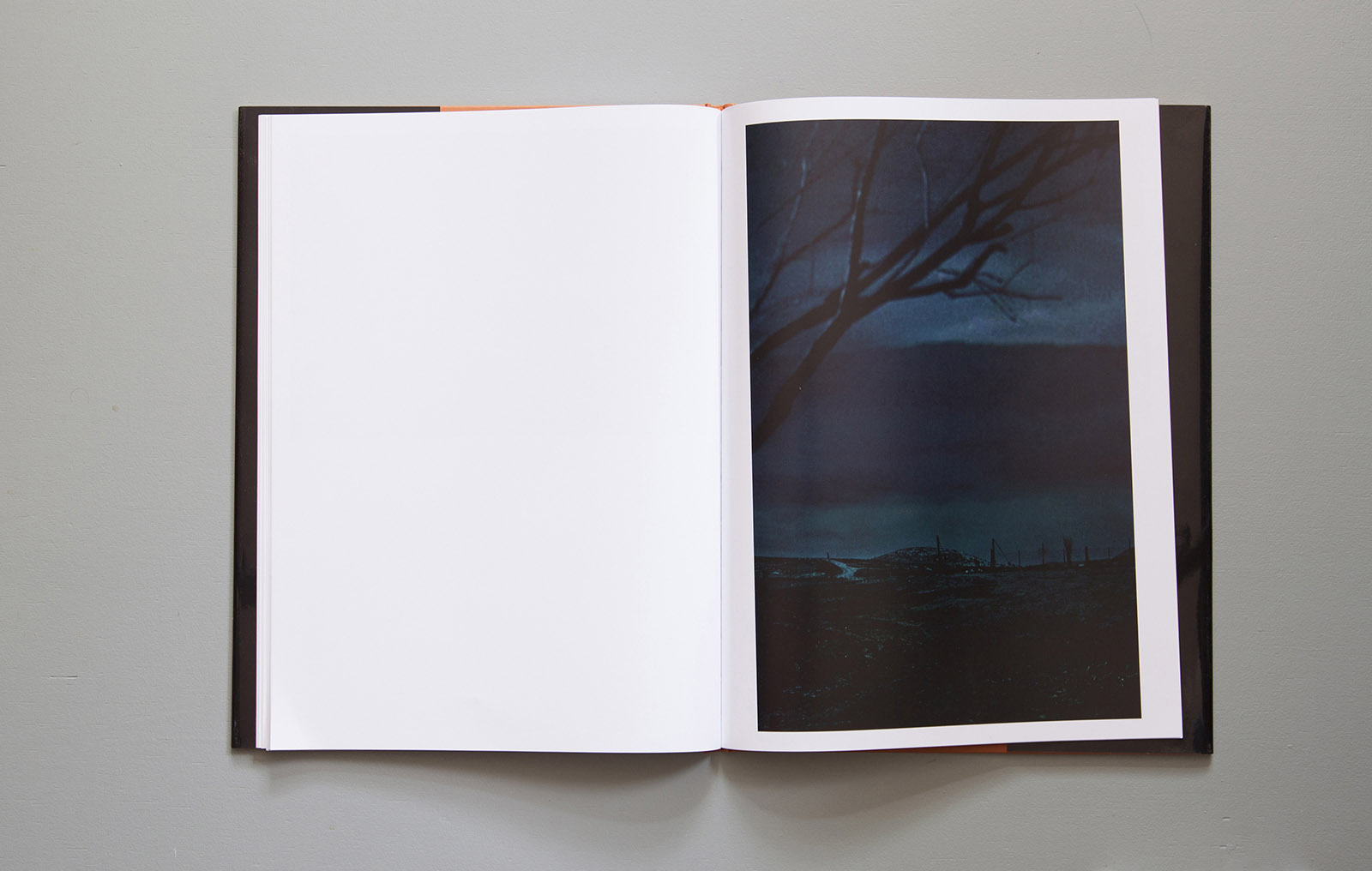
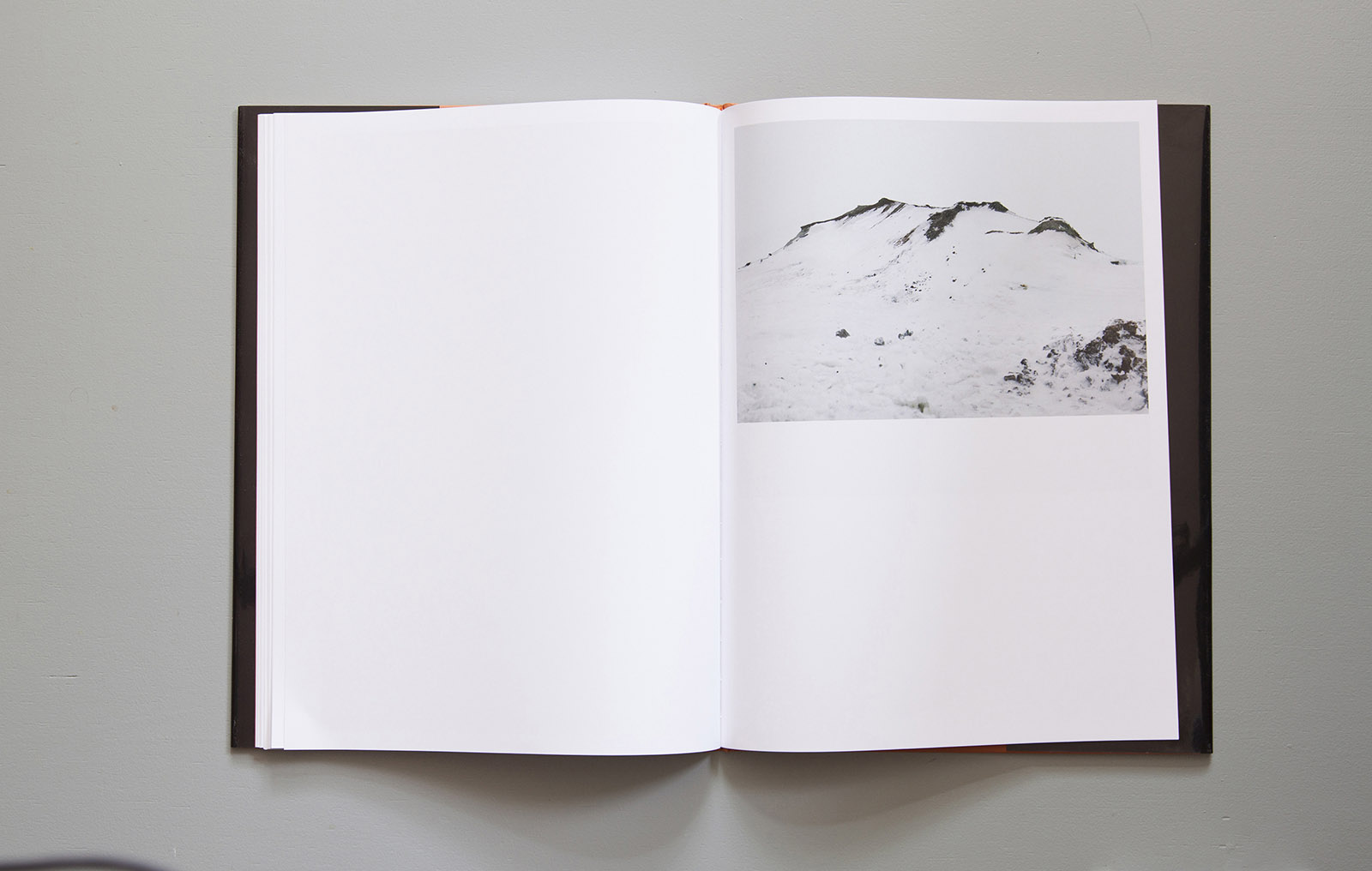
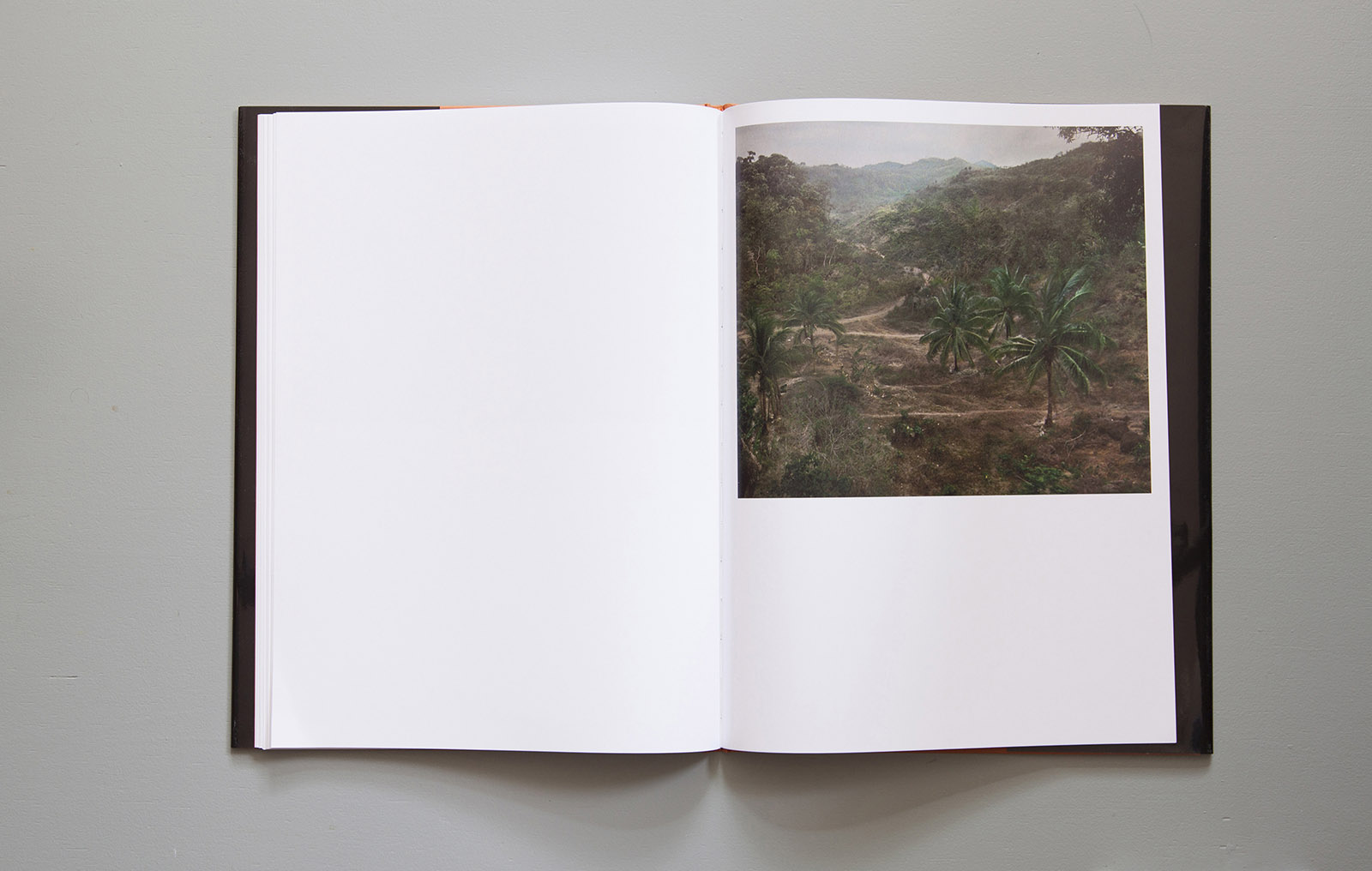
Terra Nullius published by Art Paper Editions, 2019
Conversation with David Campany
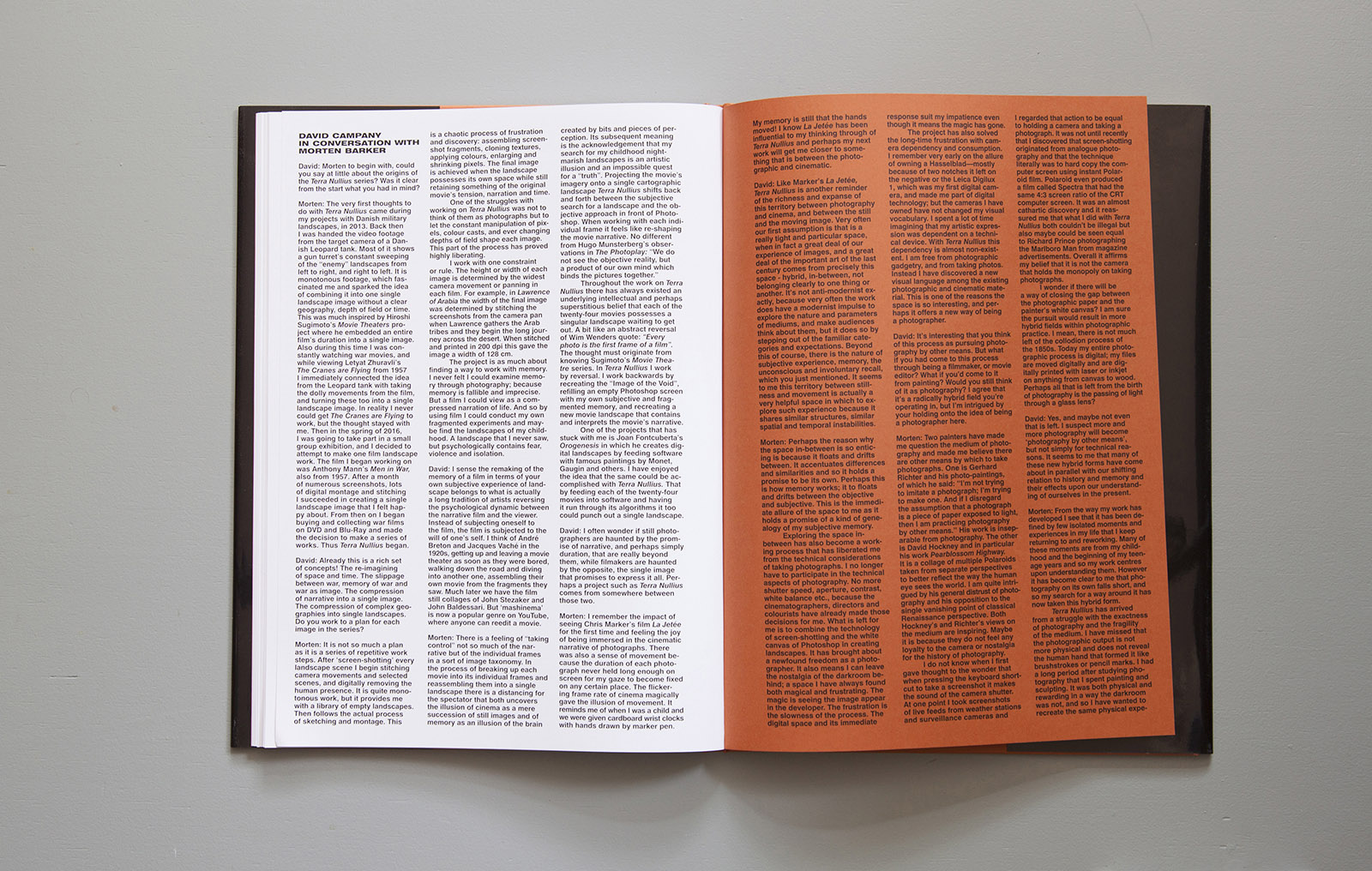
David:
Morten, to begin with, could you say a little about the
origins of the Terra Nullius series? Was it clear from the
start what you had in mind?
Morten:
The very first thoughts to do with Terra Nullius came
during my projects with Danish military landscapes, in 2013.
Back then I was handed the video footage from the target
camera of a Danish Leopard tank. Most of it shows a gun
turret’s constant sweeping of the “enemy” landscapes from
left to right, and right to left. It is monotonous footage,
which fascinated me and sparked the idea of combining it
into one single landscape image without a clear geography,
depth of field, or time. This was much inspired by Hiroshi
Sugimoto’s MovieTheaters project where he embedded an entire
film’s duration into a single image. Also during this time,
I was constantly watching war movies, and while viewing
Letyat Zhuravli’s The Cranes are Flying from 1957 I
immediately connected the idea from the Leopard tank with
taking the dolly movements from the film, and turning these
too into a single landscape image. In reality, I never could
get The Cranes are Flying to work, but the thought stayed
with me. Then in the spring of 2016, I was going to take
part in a small group exhibition, and I decided to attempt
to make one film landscape work. The film I began working on
was Anthony Mann’s Men in War, also from 1957. After a month
of numerous screenshots, lots of digital montage and
stitching I succeeded in creating a single landscape image
that I felt happy about. From then on I began buying and
collecting war films on DVD and Blu-Ray and made the
decision to make a series of works. Thus Terra Nullius
began.
David:
Already this is a rich set of concepts! The re-imagining of
space and time. The slippage between war, memory of war, and
war as image. The compression of narrative into a single
image. The compression of complex geographies into single
landscapes. Do you work to a plan for each image in the
series?
Morten:
It is not so much a plan as it is a series of repetitive
work steps. After ‘screen-shotting’ every landscape scene I
begin stitching camera movements and selected scenes, and
digitally removing the human presence. It is quite
monotonous work, but it provides me with a library of empty
landscapes. Then follows the actual process of sketching and
montage. This is a chaotic process of frustration and
discovery: assembling screenshot fragments, cloning
textures, applying colors, enlarging, and shrinking pixels.
The final image is achieved when the landscape possesses its
own space while still retaining something of the original
movie’s tension, narration, and time. One of the struggles
with working on Terra Nullius was not to think of them as
photographs but to let the constant manipulation of pixels,
color casts, and ever-changing depths of field shape each
image. This part of the process has proved highly
liberating. I work with one constraint or rule. The height
or width of each image is determined by the widest camera
movement or panning in each film. For example, in Lawrence
of Arabia, the width of the final image was determined by
stitching the screenshots from the camera pan when Lawrence
gathers the Arab tribes and they begin the long journey
across the desert. When stitched and printed in 200 dpi this
gave the image a width of 128 cm. The project is as much
about finding a way to work with memory. I never felt I
could examine memory through photography; because memory is
fallible and imprecise. But a film I could view as a
compressed narration of life. And so by using film I could
conduct my own fragmented experiments and maybe find the
landscapes of my childhood. A landscape that I never saw,
but psychologically contains fear, violence, and
isolation.
David:
I sense the remaking of the memory of a film in terms of
your own subjective experience of landscape belongs to what
is actually a long tradition of artists reversing the
psychological dynamic between the narrative film and the
viewer. Instead of subjecting oneself to the film, the film
is subjected to the will of one’s self. I think of André
Breton and Jacques Vaché in the 1920s, getting up and
leaving a movie theater as soon as they were bored, walking
down the road and diving into another one, assembling their
own movie from the fragments they saw. Much later we have
the film still collages of John Stezaker and John
Baldessari. But ‘mashinema’ is now a popular genre on
YouTube, where anyone can reedit a movie.
Morten:
There is a feeling of “taking control” not so much of the
narrative but of the individual frames in a sort of image
taxonomy. In the process of breaking up each movie into its
individual frames and reassembling them into a single
landscape there is a distancing for the spectator that both
uncovers the illusion of cinema as a mere succession of
still images and of memory as an illusion of the brain
created by bits and pieces of perception. Its subsequent
meaning is the acknowledgment that my search for my
childhood nightmarish landscapes is an artistic illusion and
an impossible quest for a “truth”. Projecting the movie’s
imagery onto a single cartographic landscape Terra Nullius
shifts back and forth between the subjective search for a
landscape and the objective approach in front of Photoshop.
When working with each individual frame it feels like
reshaping the movie narrative. No different from Hugo
Munsterberg’s observations in The Photoplay: “We do not see
the objective reality, but a product of our own mind which
binds the pictures together.” Throughout the work on Terra
Nullius there has always existed an underlying intellectual
and perhaps superstitious belief that each of the
twenty-four movies possesses a singular landscape waiting to
get out. A bit like an abstract reversal of Wim Wenders
quote: “Every photo is the first frame of a film”. The
thought must originate from knowing Sugimoto’s
MovieTheatreseries. In Terra Nullius I work by reversal. I
work backward by recreating the “Image of the Void”,
refilling an empty Photoshop screen with my own subjective
and fragmented memory, and recreating a new movie landscape
that contains and interprets the movie’s narrative. One of
the projects that has stuck with me is Joan Fontcuberta’s
Orogenesis in which he creates digital landscapes by feeding
software with famous paintings by Monet, Gaugin, and others.
I have enjoyed the idea that the same could be accomplished
with Terra Nullius. That by feeding each of the twenty-four
movies into software and having it run through its
algorithms it too could punch out a single landscape.
David:
I often wonder if still photographers are haunted by the
promise of narrative, and perhaps simply duration, that are
really beyond them, while filmmakers are haunted by the
opposite, the single image that promises to express it all.
Perhaps a project such as Terra Nullius comes from somewhere
between those two.
Morten:
I remember the impact of seeing Chris Marker’s film La
Jetée for the first time and feeling the joy of being
immersed in the cinematic narrative of photographs. There
was also a sense of movement because the duration of each
photograph never held long enough on screen for my gaze to
become fixed on any certain place. The flickering frame rate
of cinema magically gave the illusion of movement. It
reminds me of when I was a child and we were given cardboard
wrist clocks with hands drawn by marker pen. My memory is
still that the hands moved! I know La Jetée has been
influential to my thinking through Terra Nullius and perhaps
my next work will get me closer to something that is between
the photographic and cinematic.
David:
Like Marker’s La Jetée, Terra Nullius is another reminder
of the richness and expanse of this territory between
photography and cinema, and between the still and the moving
image. Very often our first assumption is that it is a
really tight and particular space, when in fact a great deal
of our experience of images, and a great deal of the
important art of the last century comes from precisely this
space – hybrid, in-between, not belonging clearly to one
thing or another. It’s not anti-modernist exactly, because
very often the work does have a modernist impulse to explore
the nature and parameters of mediums, and make audiences
think about them, but it does so by stepping out of the
familiar categories and expectations. Beyond this of course,
there is the nature of subjective experience, memory, the
unconscious, and involuntary recall, which you just
mentioned. It seems to me this territory between stillness
and movement is actually a very helpful space in which to
explore such experience because it shares similar
structures, similar spatial and temporal instabilities.
Morten:
Perhaps the reason why the space in-between is so enticing
is because it floats and drifts between. It accentuates
differences and similarities and so it holds a promise to be
its own. Perhaps this is how memory works; it floats and
drifts between the objective and subjective. This is the
immediate allure of the space to me as it holds a promise of
a kind of genealogy of my subjective memory
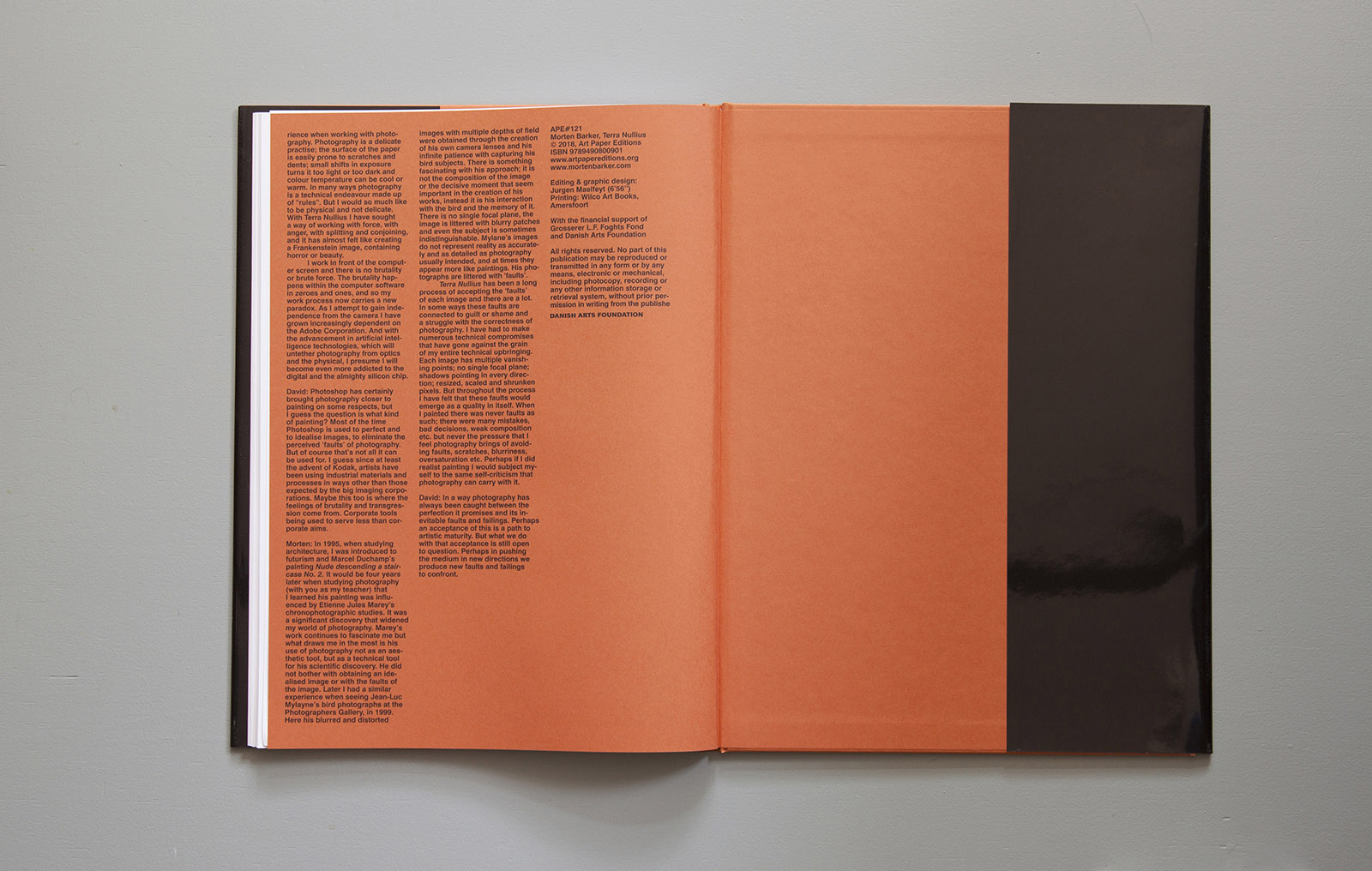
The Book Terra Nullius is generously supported by The
Danish Art Foundation and Grosserer L. F. Foghts Foundation.