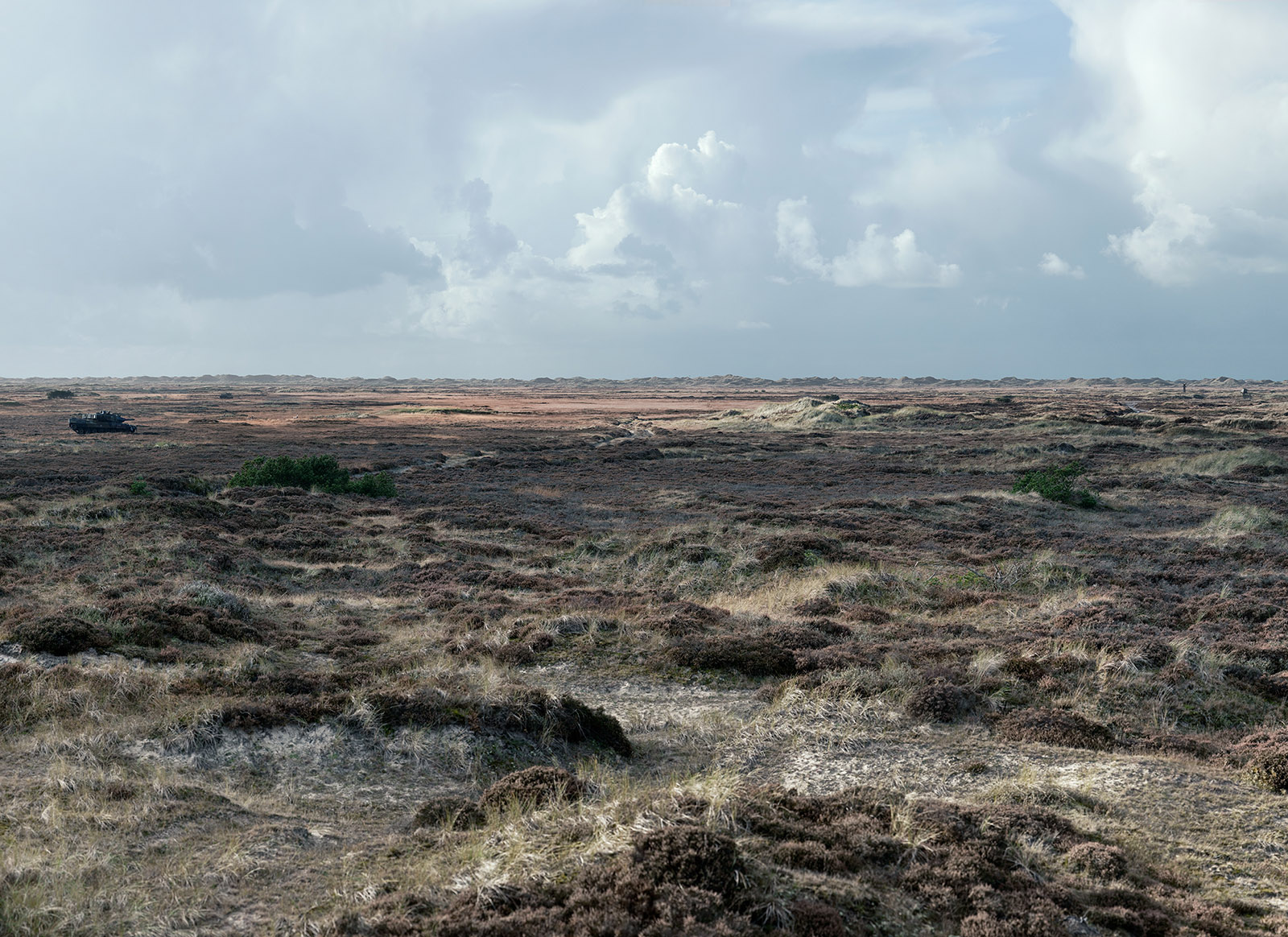
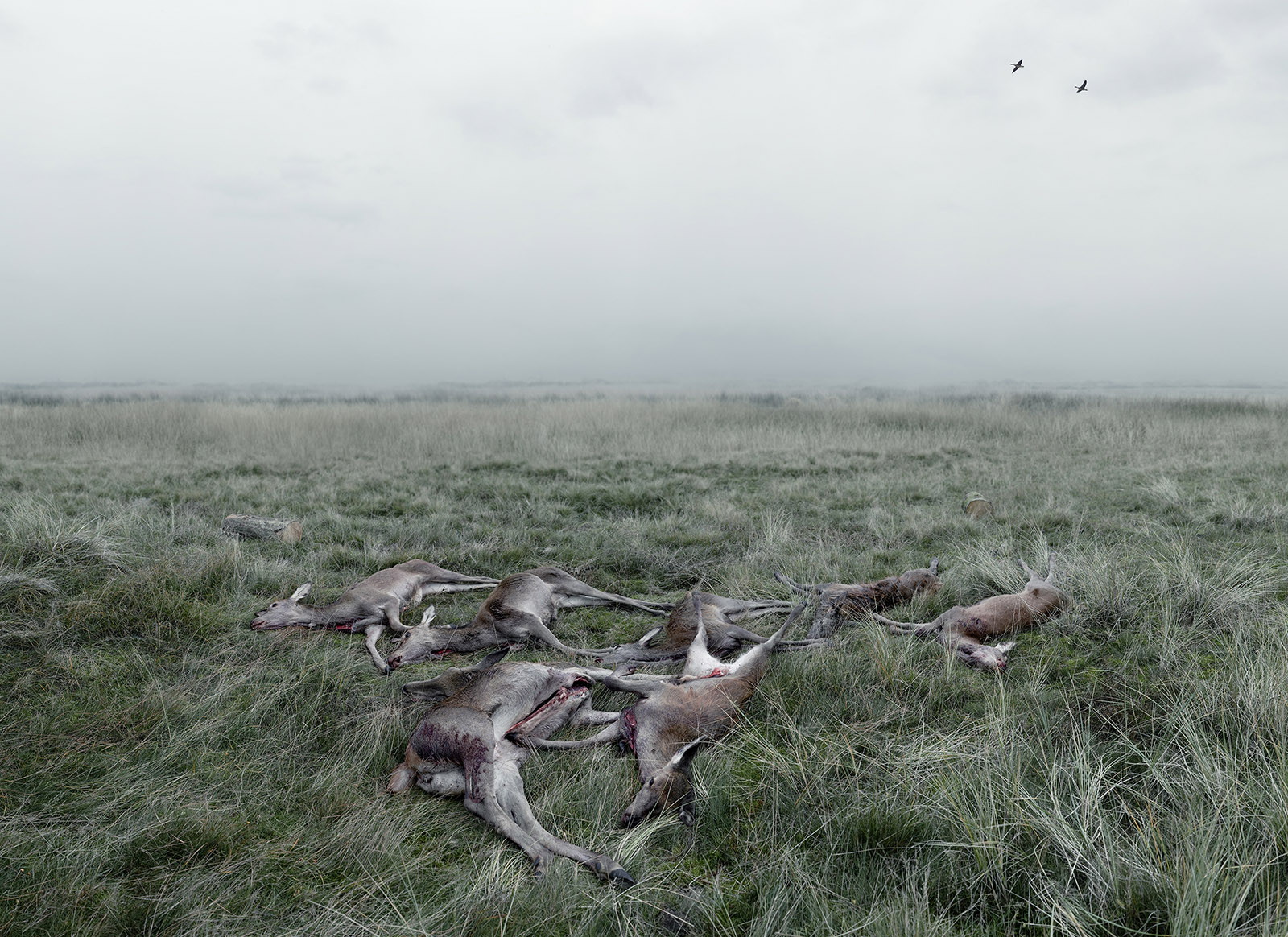
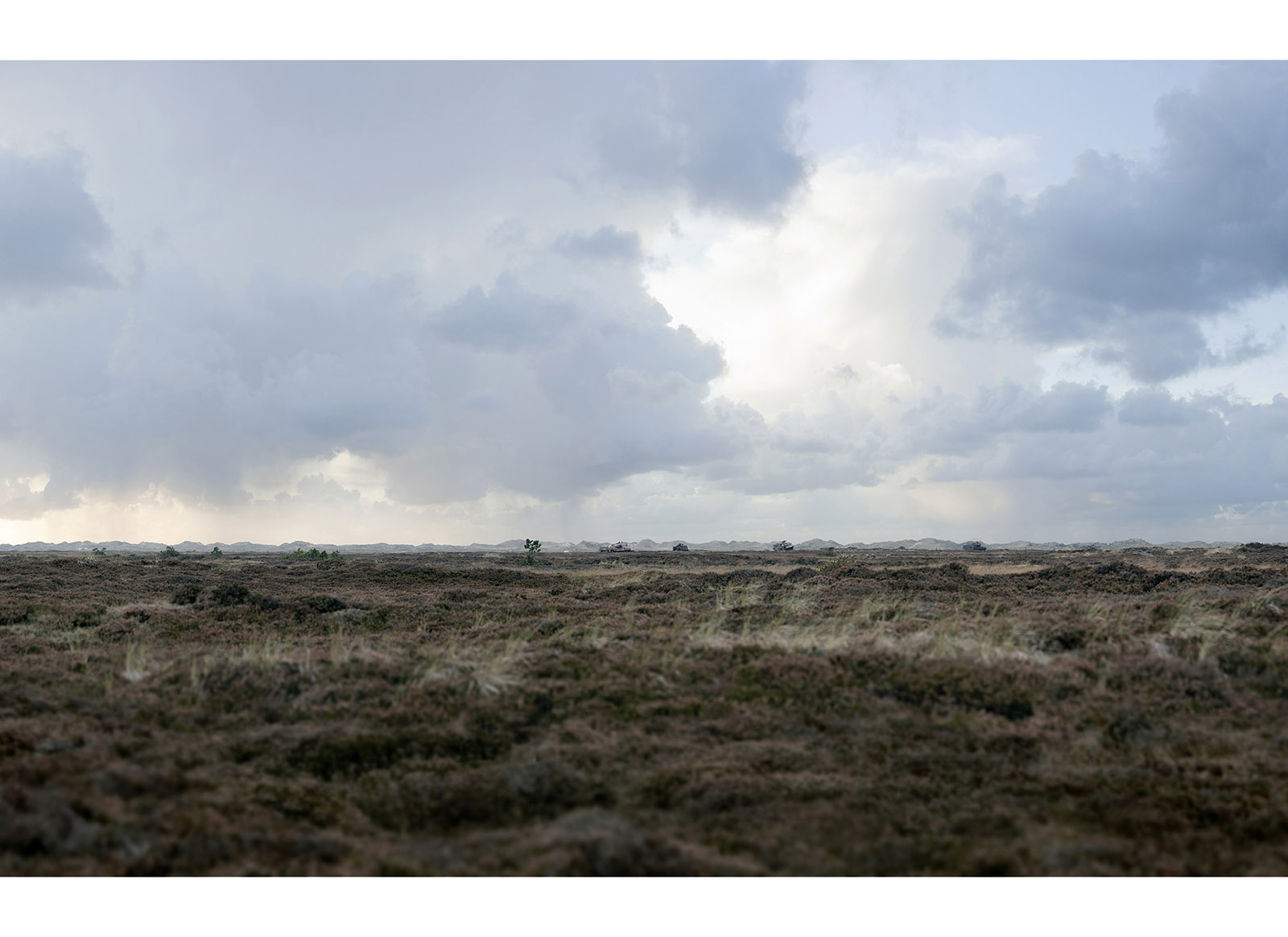
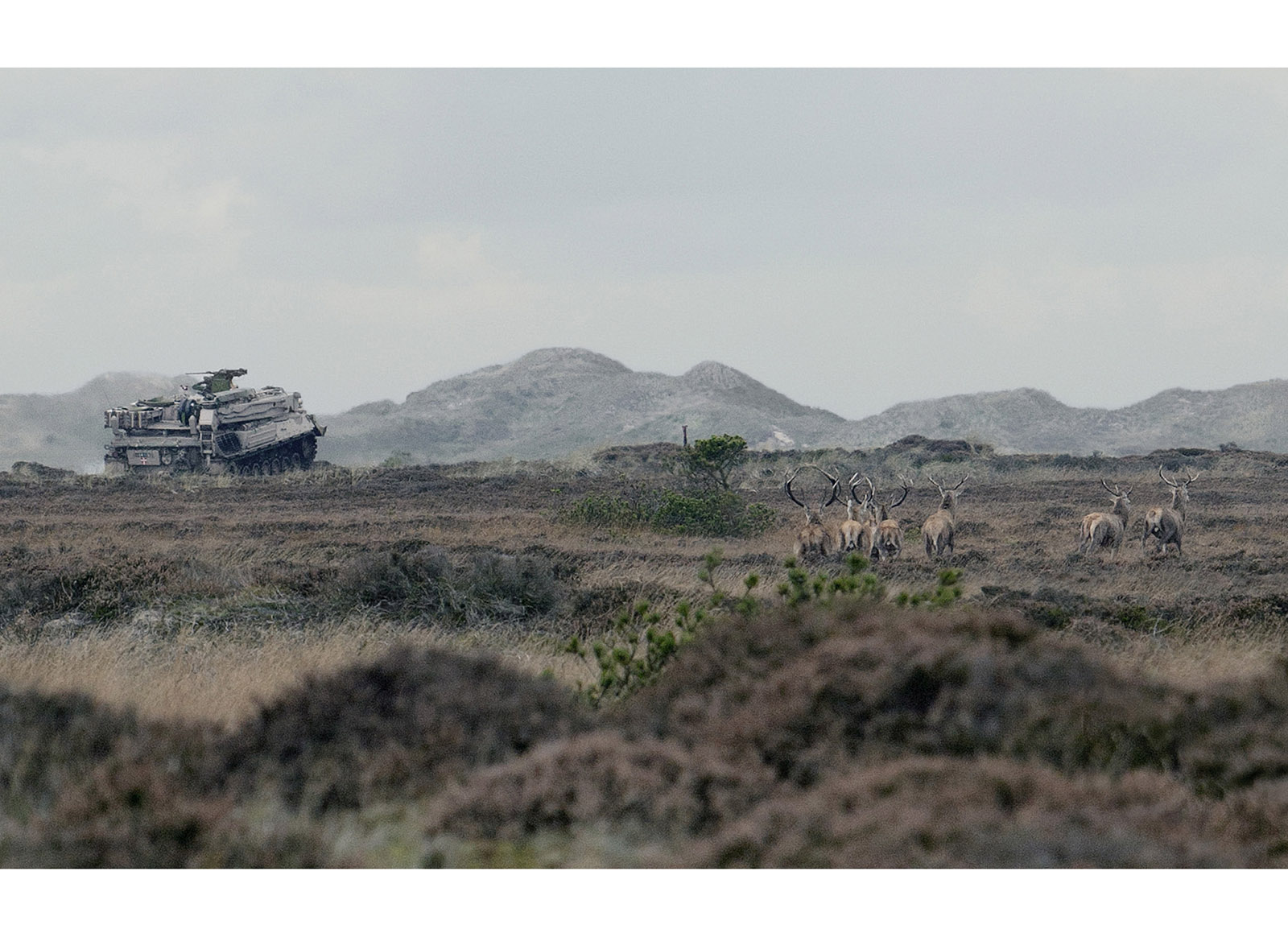
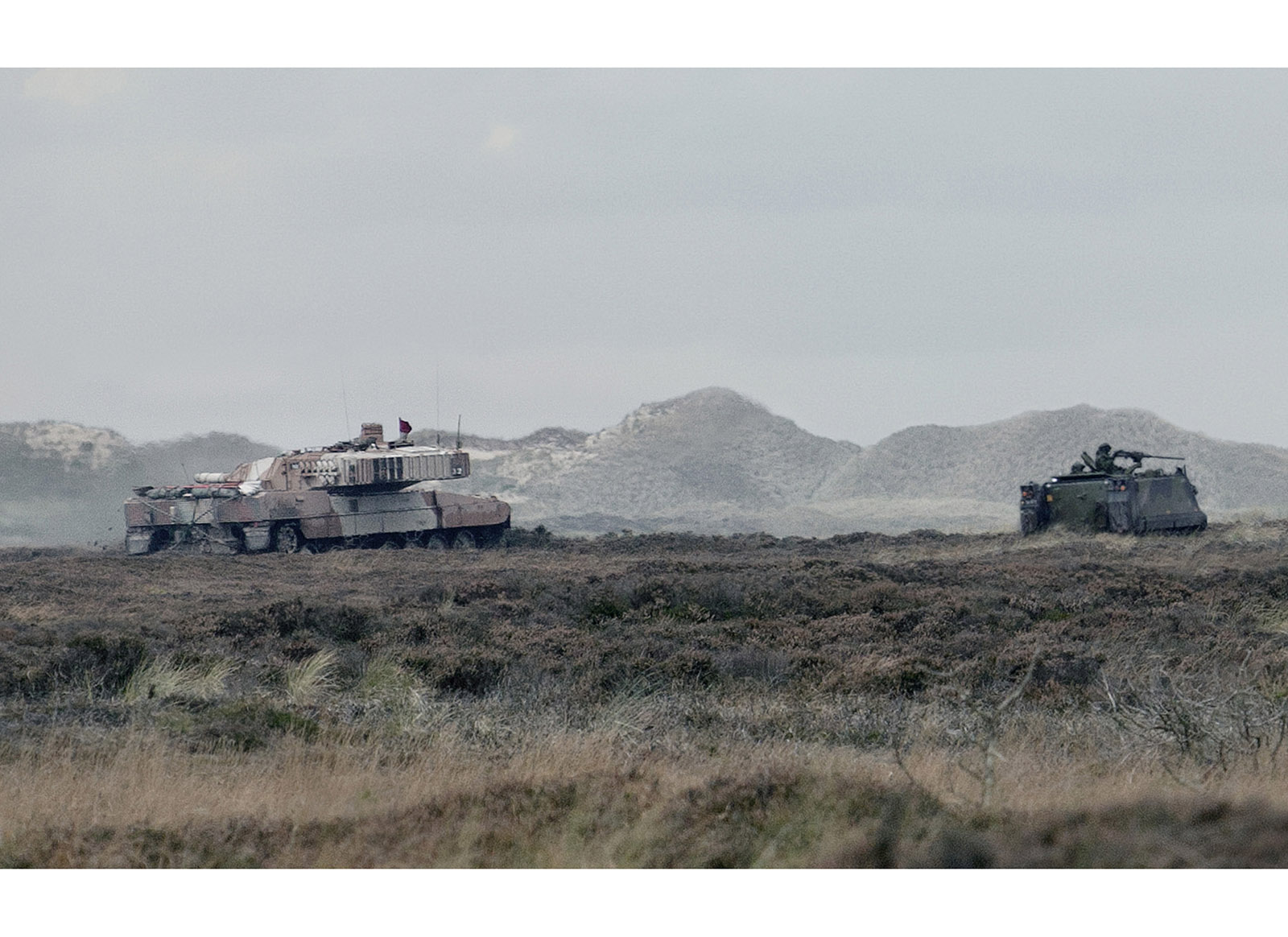
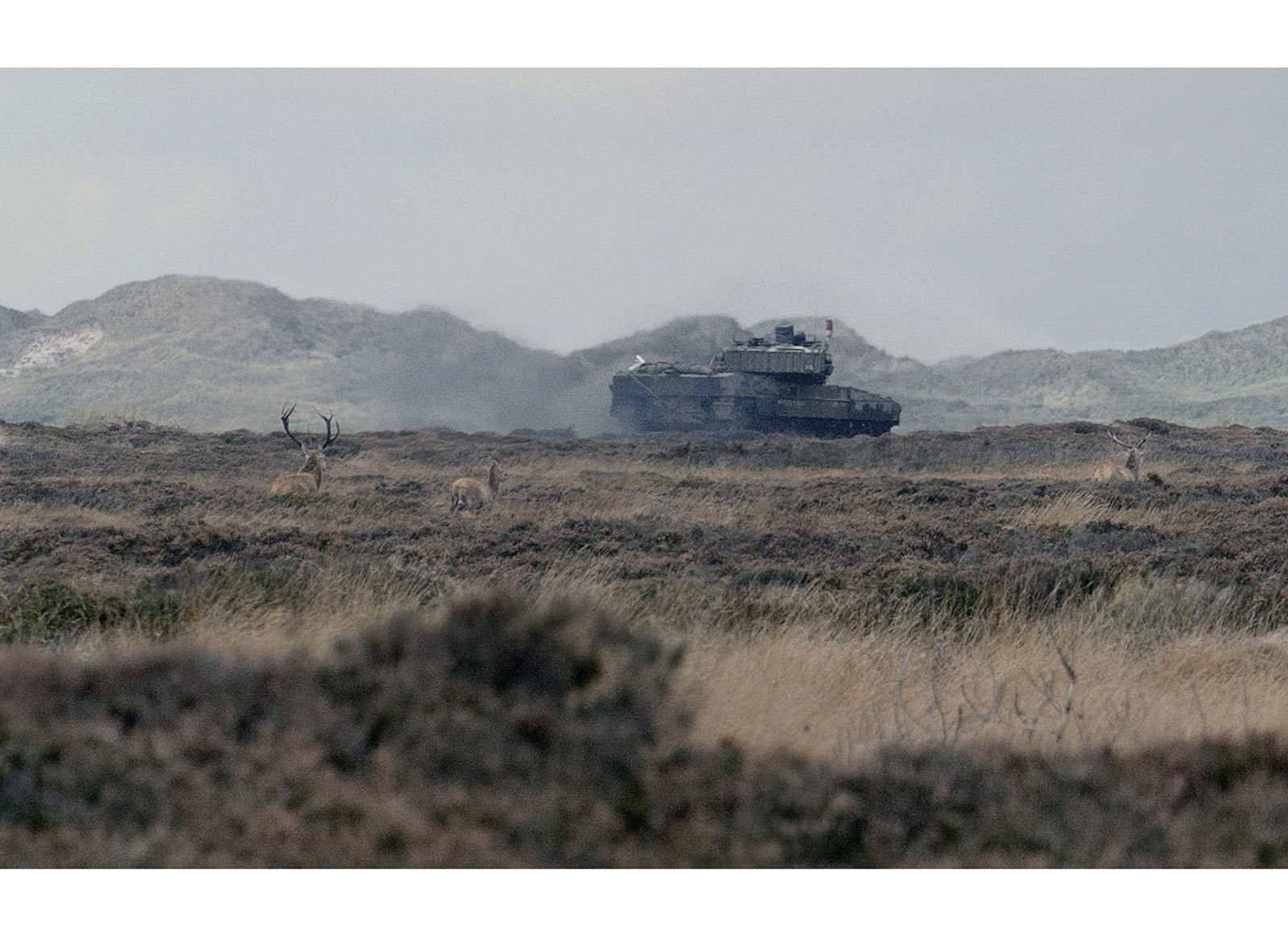
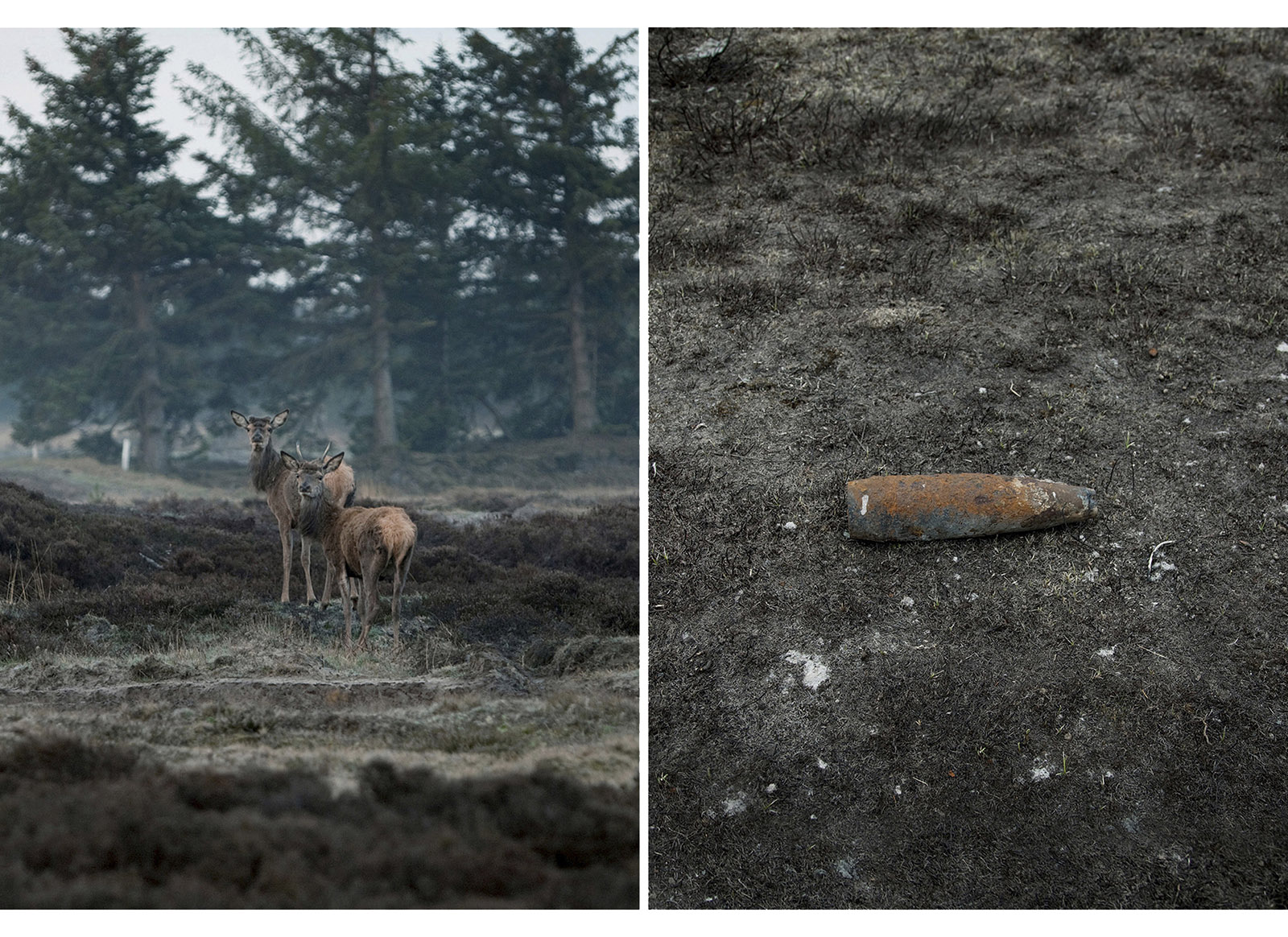
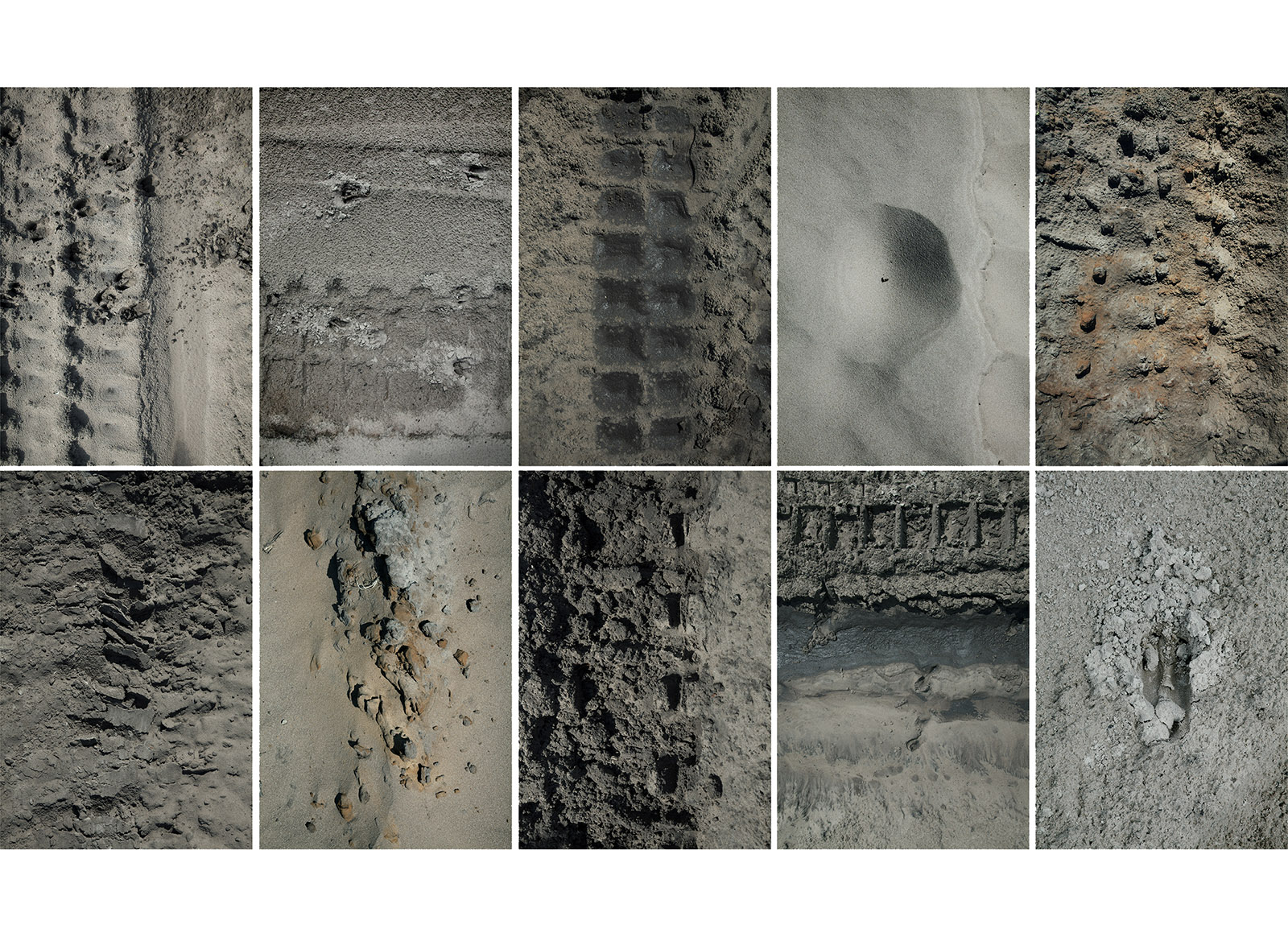
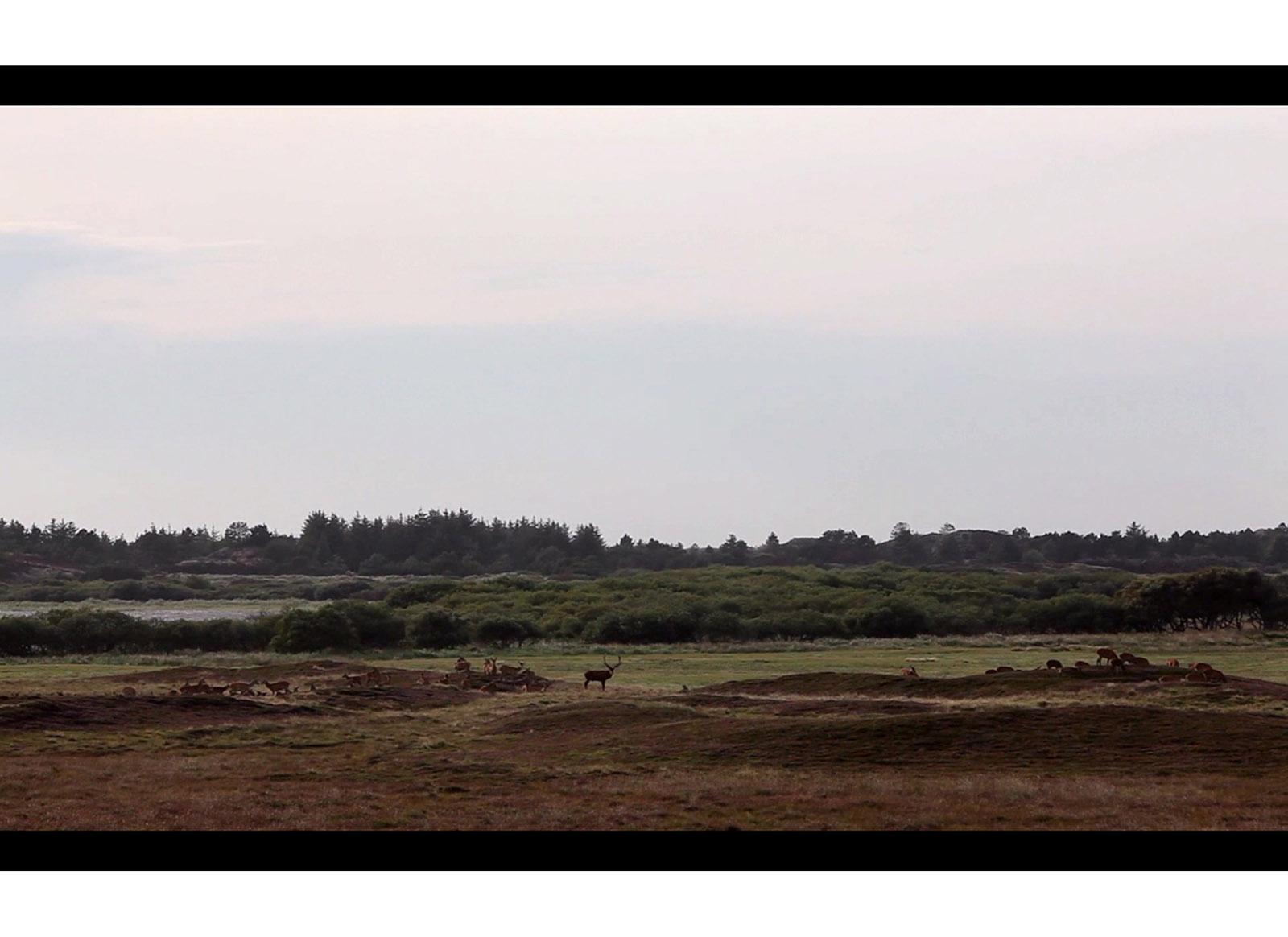
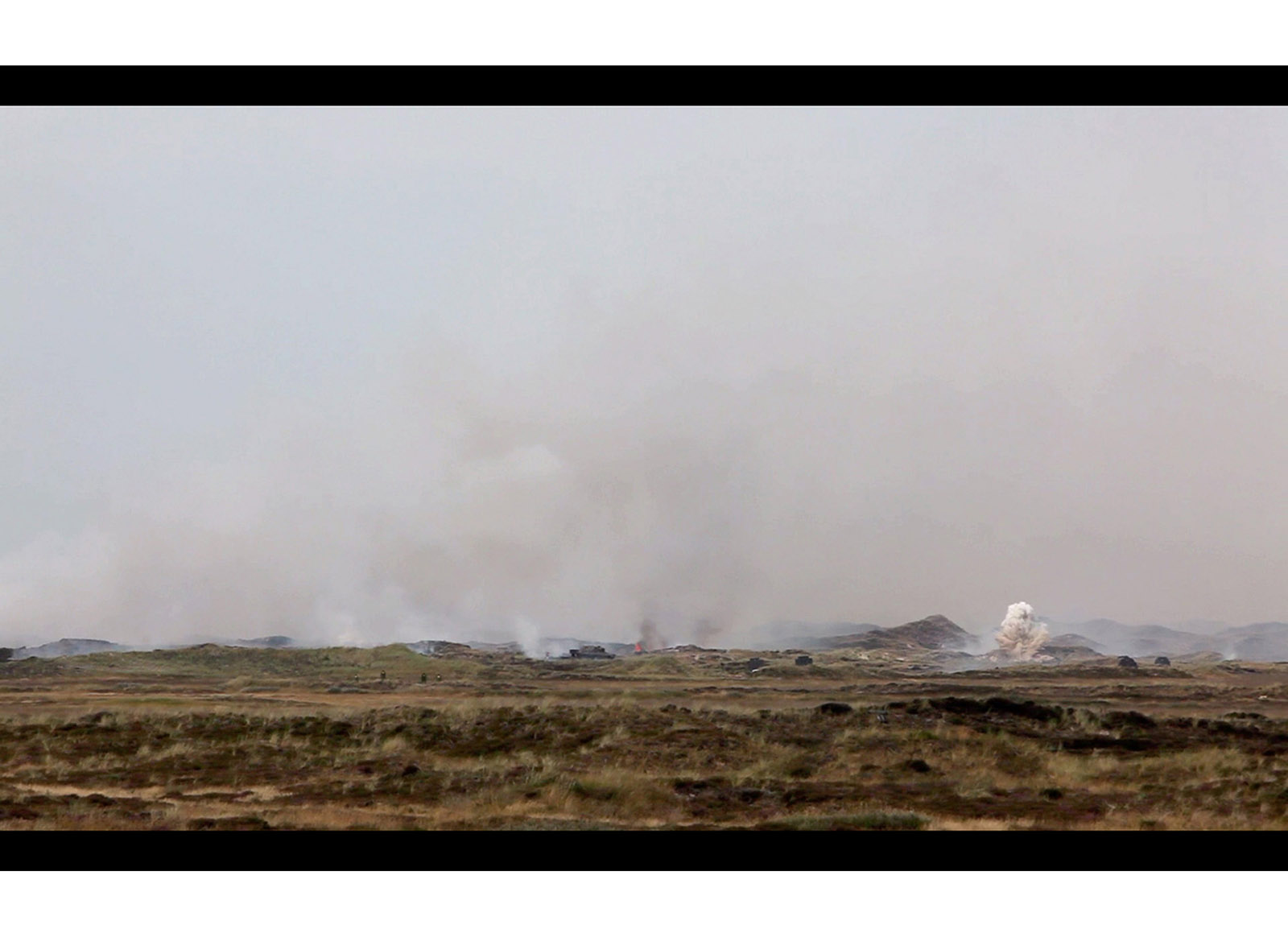
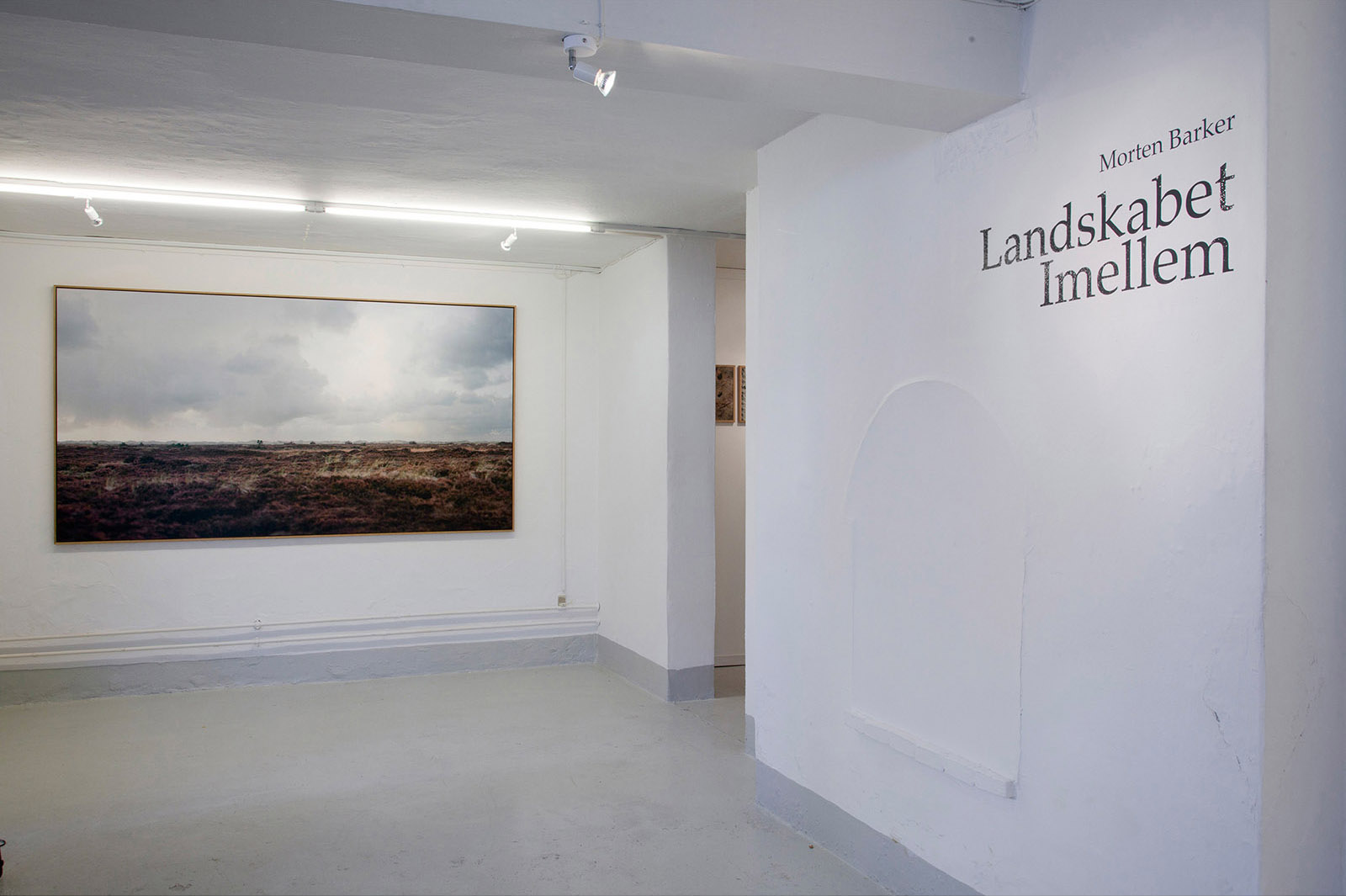
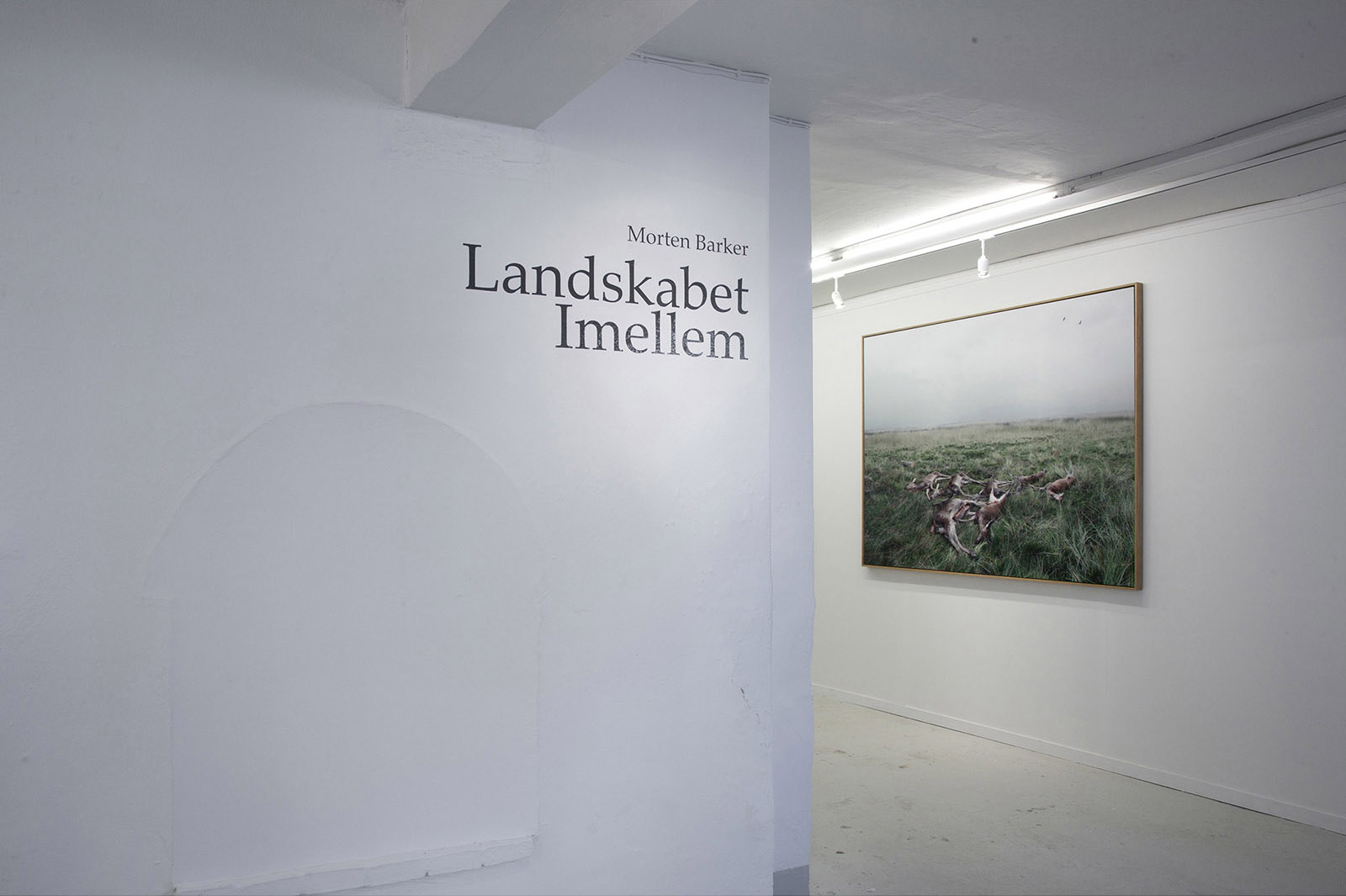
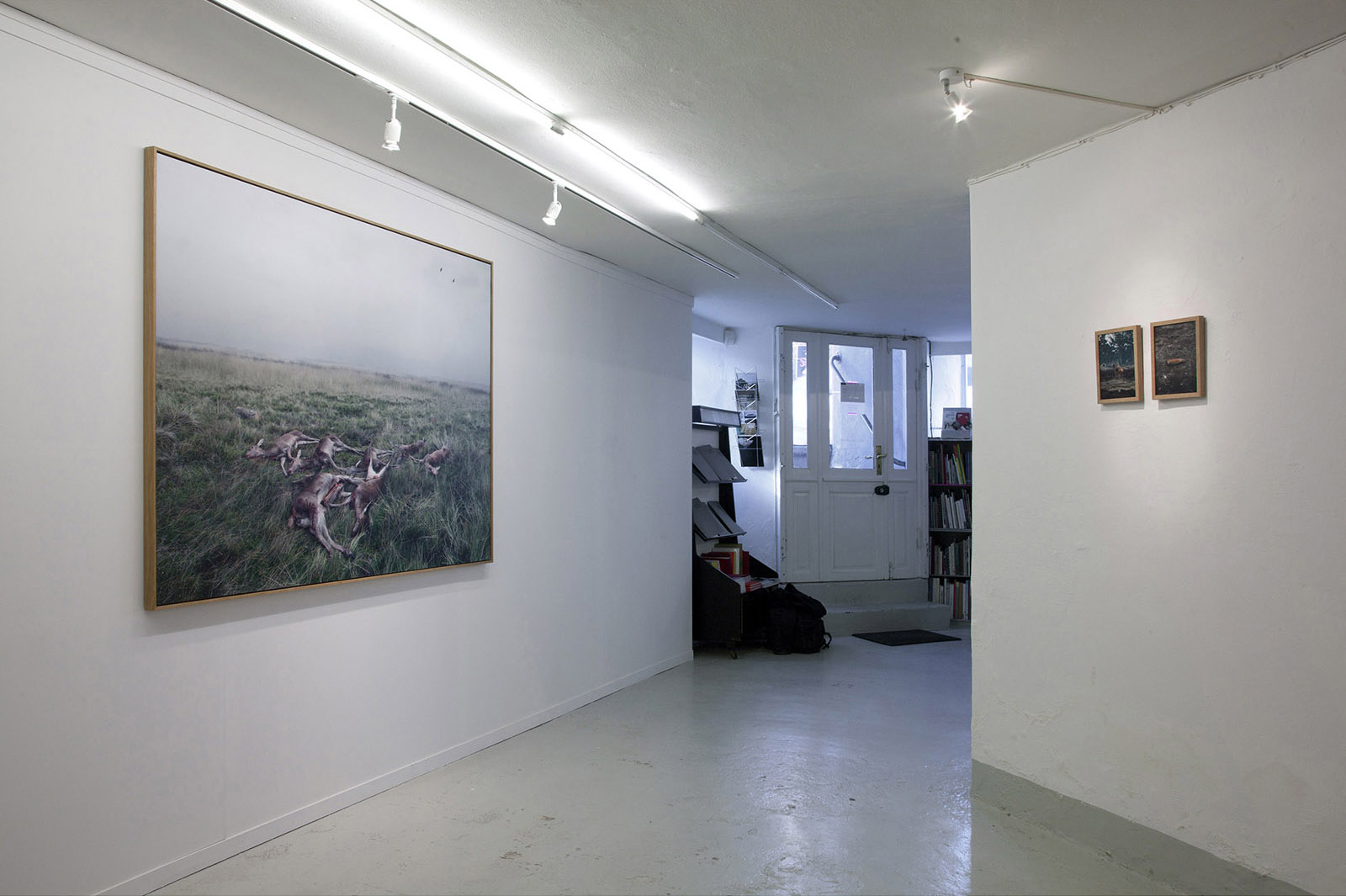
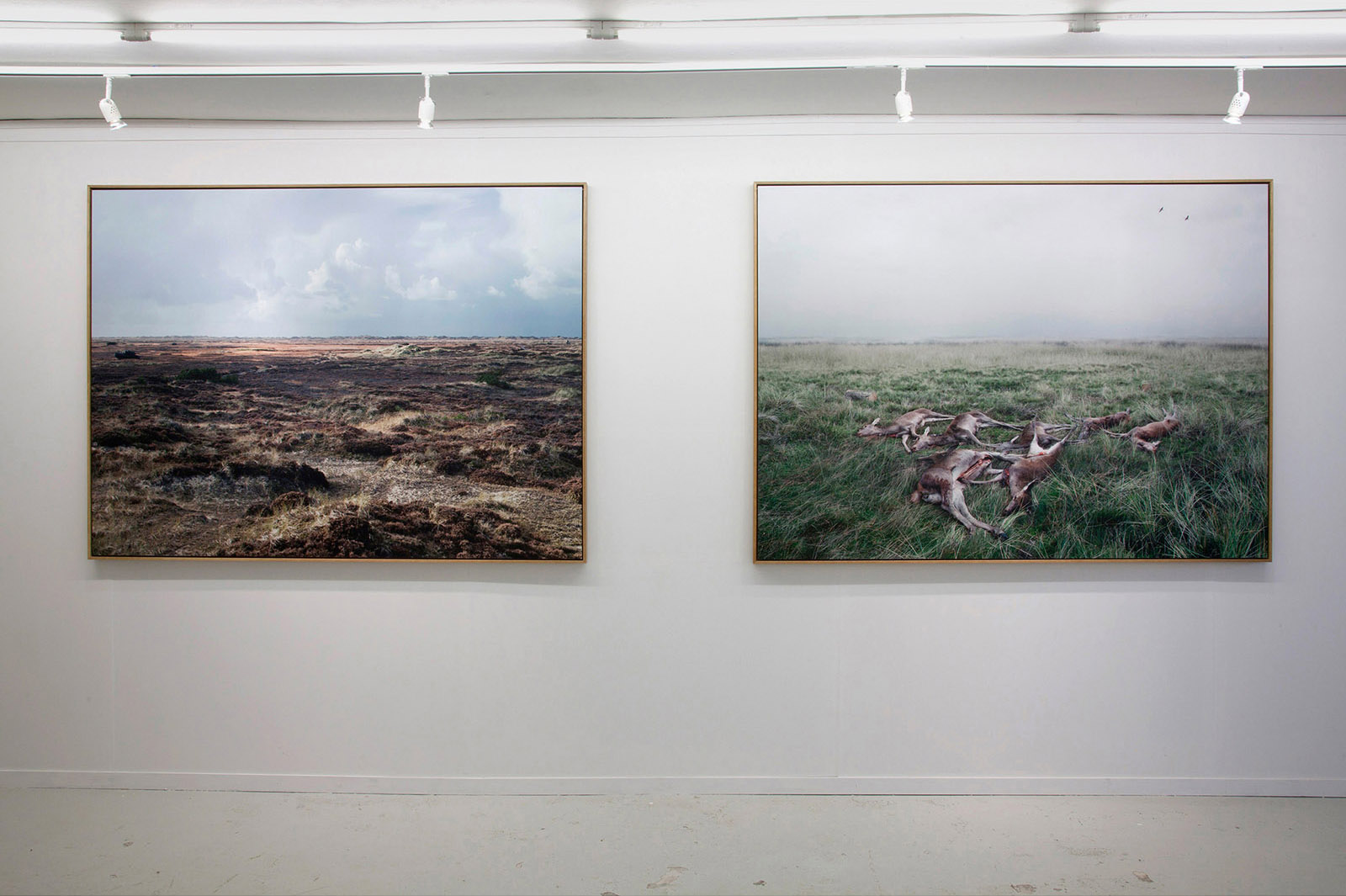
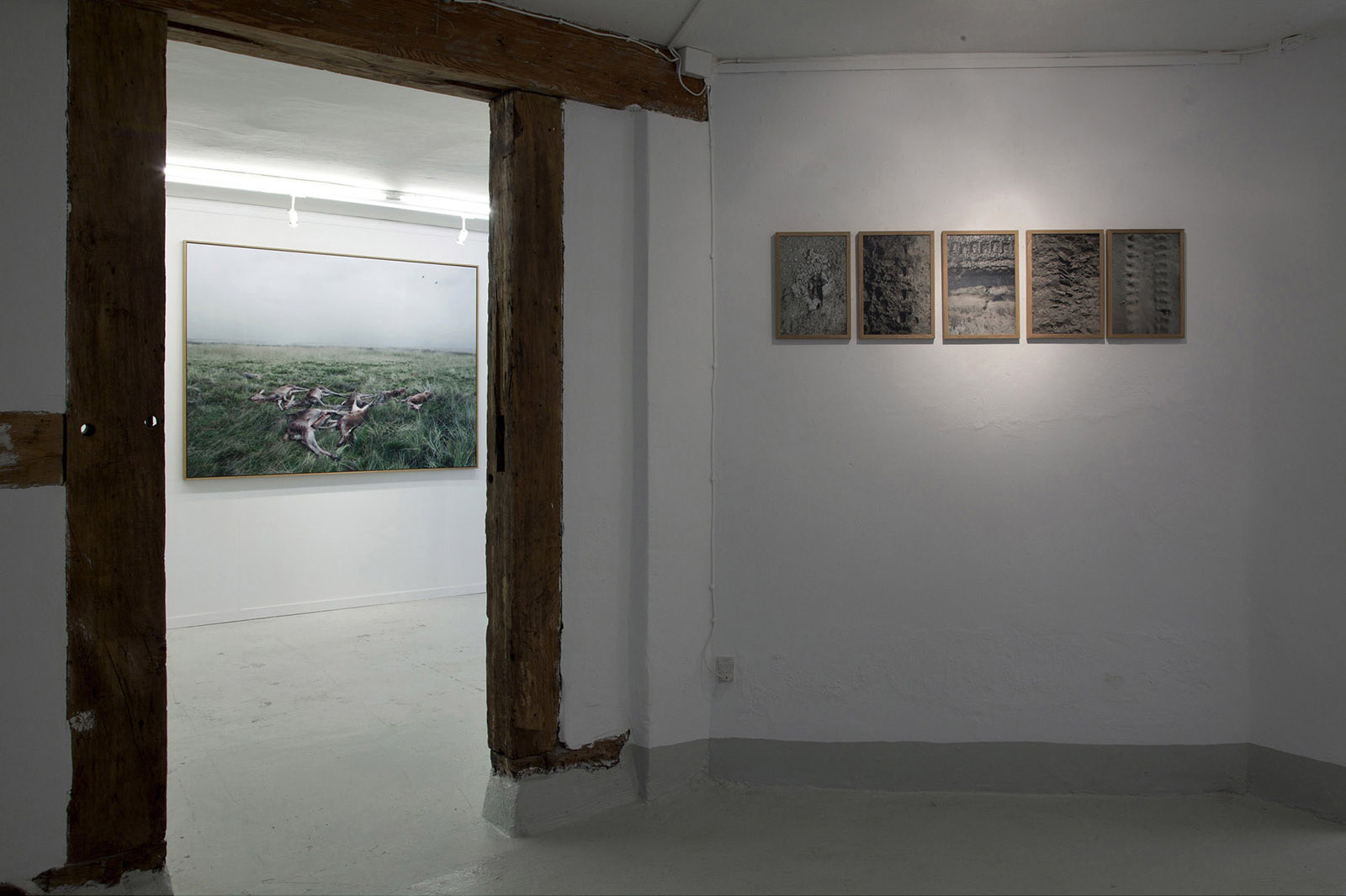
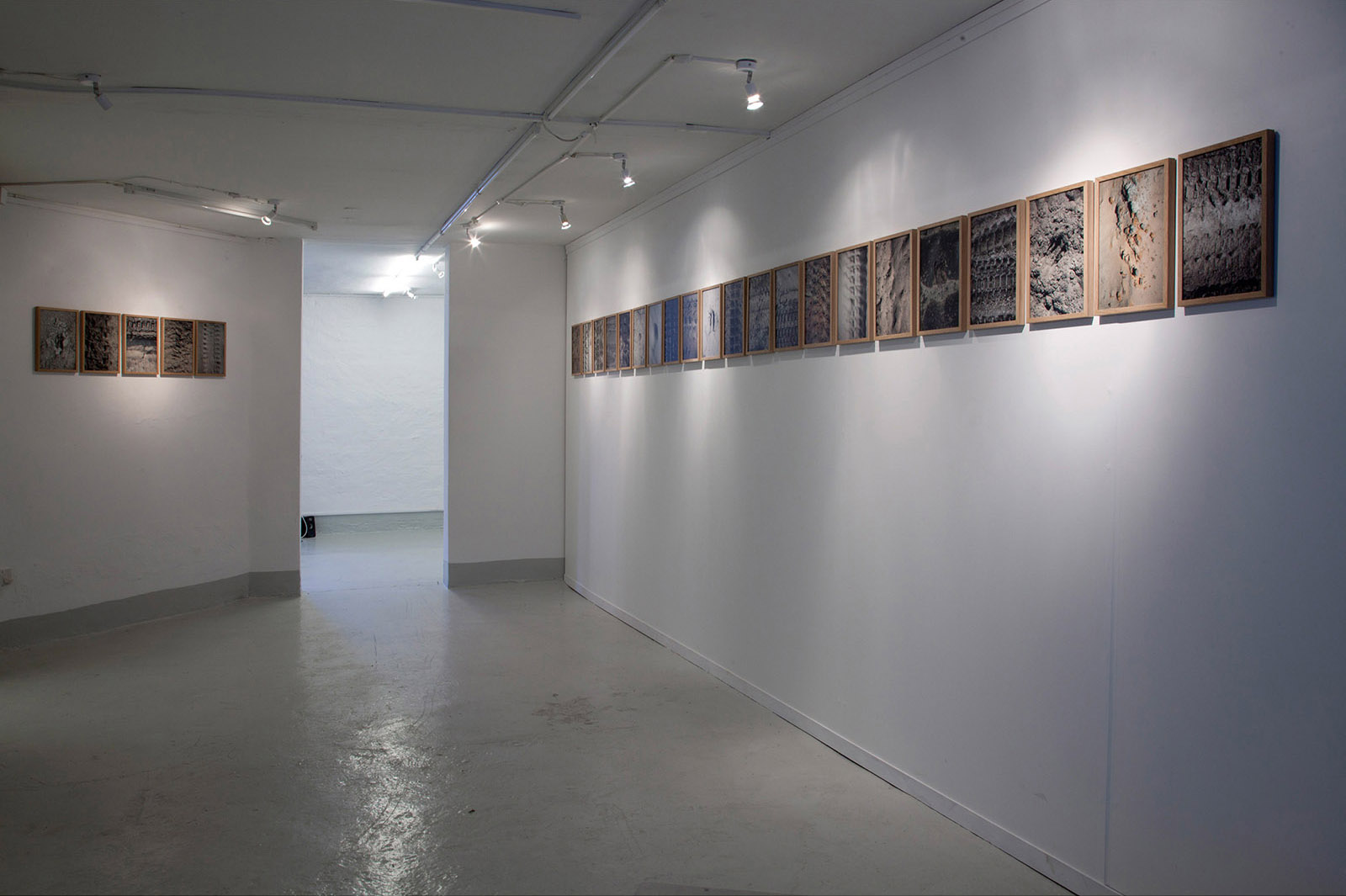
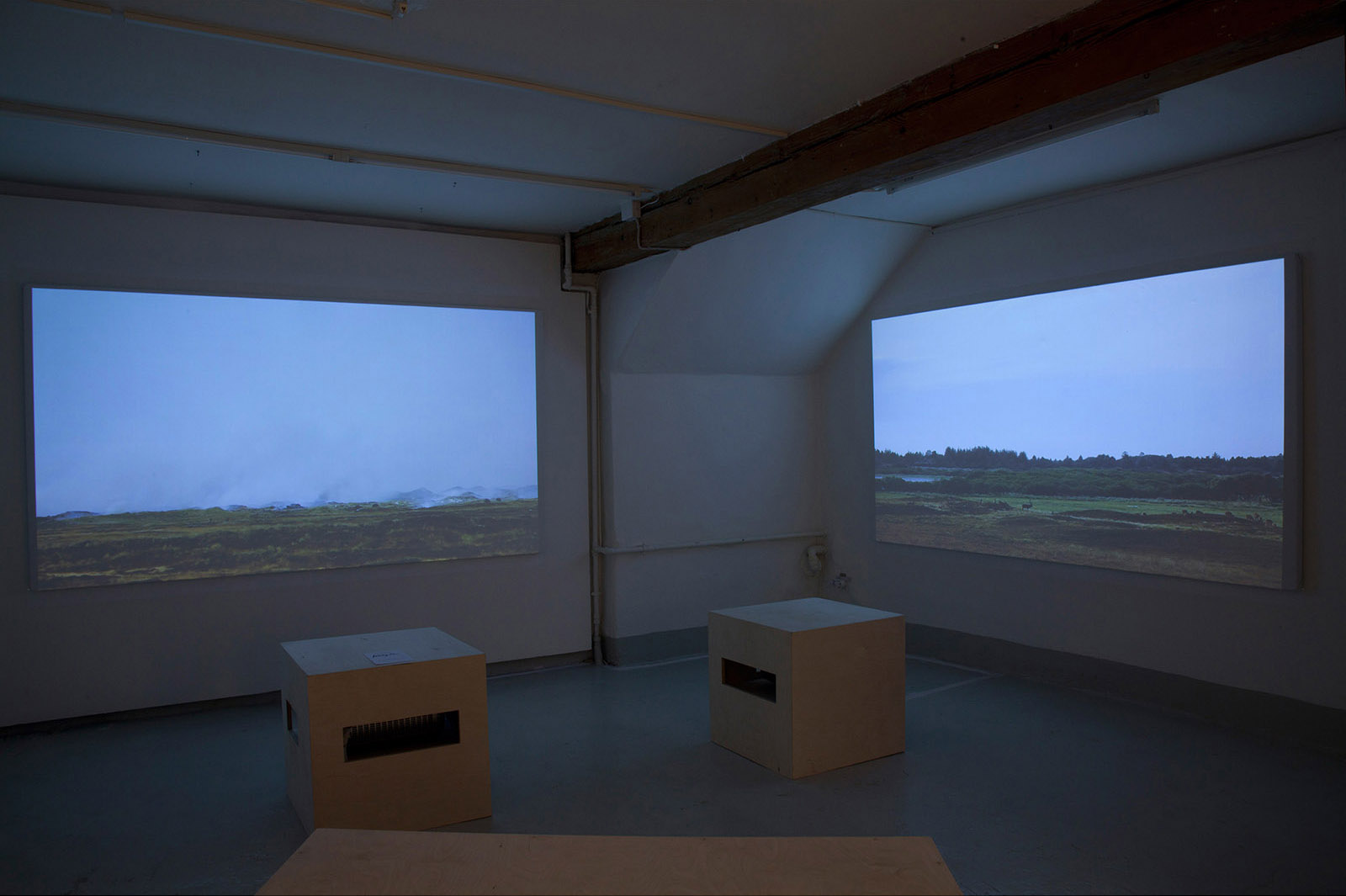
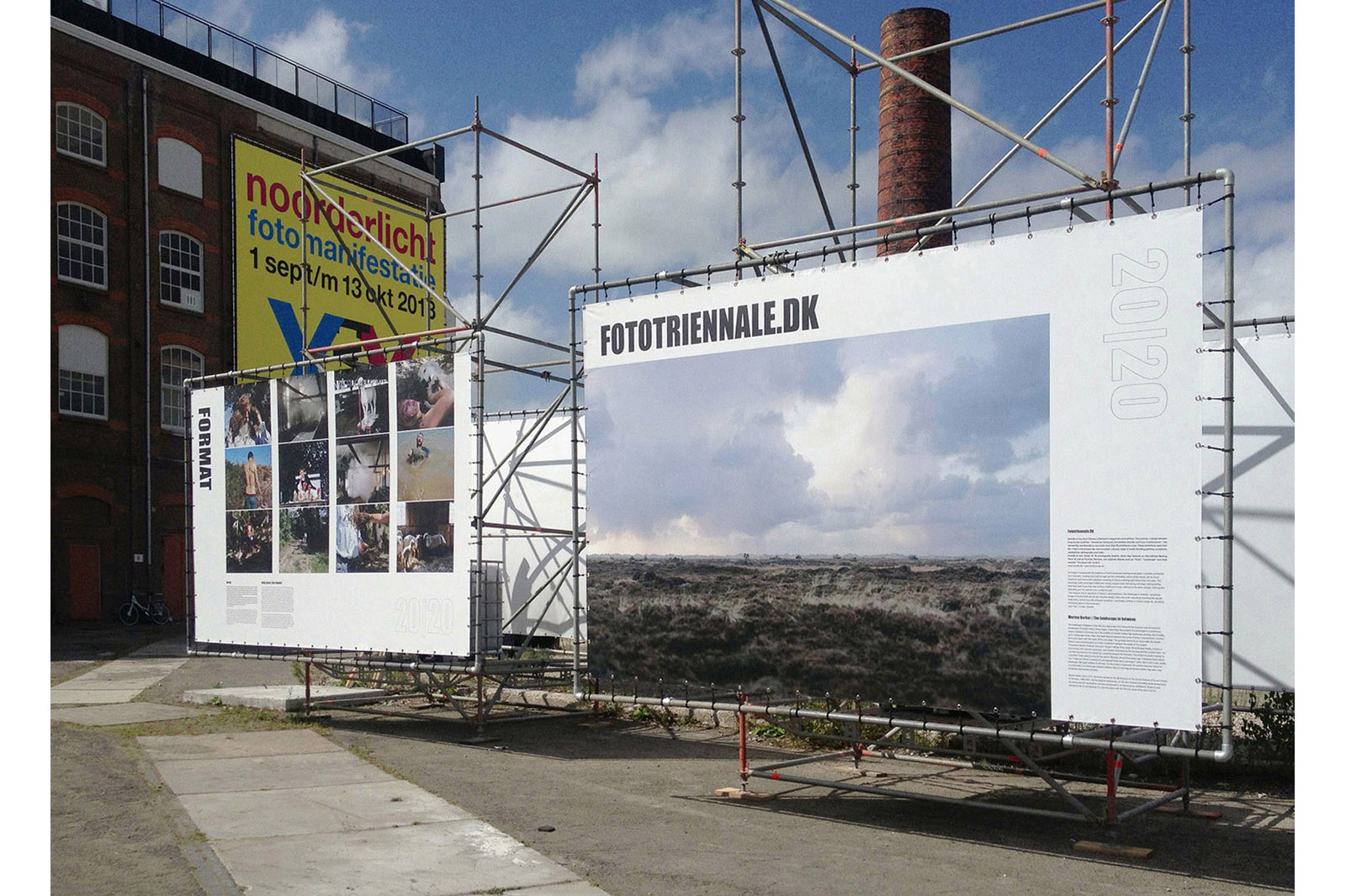
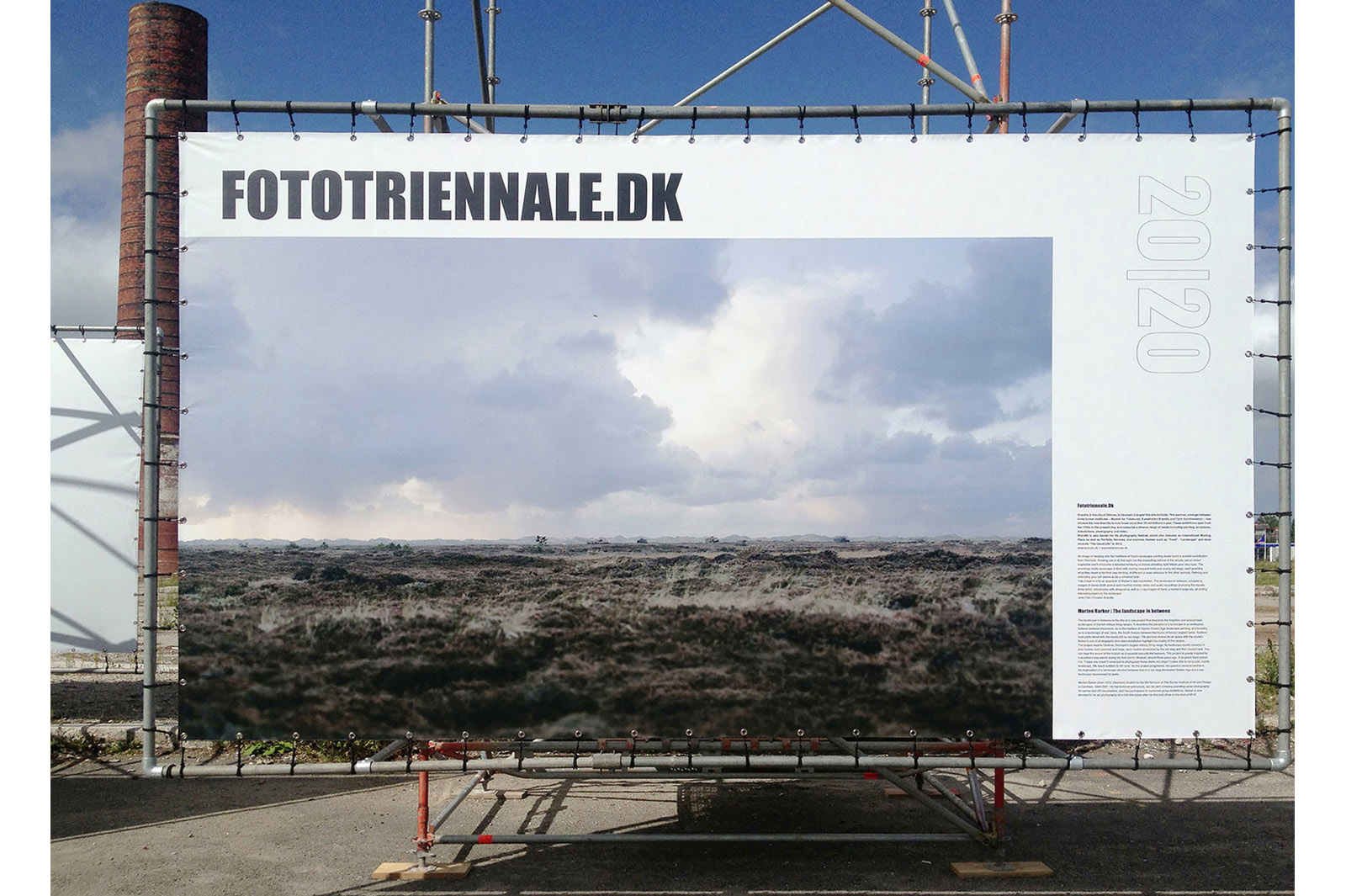
The Landscape In-Between is the title of a cluster of landscape projects interpreting the
forgotten
and
anonymous landscapes of Danish military shooting grounds. The Landscape In-Between depicts
the
paradoxical
nature of these landscapes, namely the constant reminder of the balance between the innocence of the
picturesque Danish Golden Age and the brutality of warfare. In this space, the heather blooms in the
deep
caterpillar tracks of Leopard tanks. Here, the soldier’s boot prints mix with animal tracks from
badger,
otter and red deer. Here, the cannon shells share the air with the sea eagle and the woodlark. It is
this
duality the project illustrates through photography and video installation. The project commenced in
2009,
and it includes The Forest, Songs for the Lark and the Cannon, The Stag, The Tank and the Lark, and
(W)UnderWorks.
Military exercises with the artist,
[Reportage] Posted on march 8, 2014
by
Art Mattes, (DK)
Gunpowder smoke fills the air, and the pressure from the firing of 42-kg shells tosses twigs and bark several metres
into the air in the military shooting grounds near Esbjerg, in western Denmark. Here, photo artist, Morten Barker,
is seen running around with his camera to gather material for his pieces. Kunsten.nu was invited. A series of hollow
booms penetrates the darkness of the night, and something that resembles shooting stars run across the night sky
near the constellation called the Big Dipper and then burn out. In the silence that follows, a soft light spreads
over the sandy heath landscape near Esbjerg, and then the white phosphorus grenades appear, resembling a falling
constellation with white smoke signals. Orange, yellow and grey colours illuminate sand, heather and puddles. The
scenery is poetic and beautiful, but the purpose bloody. The artillery in Oksbøl illuminates the sky with grenade
constellations to make it easier for them to strike their targets with the 42 kg grenades loaded with 22 kg dynamite
being dispatched from the howitzer cannons 15 km further inland.
Reflections between windbreaks and cannons
Morten Barker is on a hilltop, shooting enthusiastically with his camera. He is working on three different projects
simultaneously, all of which Danish focus on warfare and the overlooked soldier’s life taking place behind the
privet hedges in peripheral regions of Denmark, close to peaceful greenhouses and picturesque excursion spots. One
is the exhibition A World Between Cannons for Varde Artillery Museum in 2015, another is a project about the Danish
landscape and the third one consists of documentary pictures of the daily lives of the soldiers with explosions,
stringently lined up equipment and SMS messages to the wives during the breaks, to express gratitude to the
artillery for allowing the enthusiastic camera action man to run around among them during the exercises.
For five years, Barker has been photographing military exercises and the tracks they leave behind in the Danish
landscape. With his work, he wishes to call attention to the Danish warfare around the world, which is often hidden
away by politicians. During his work, it is all about being fast and capturing the moments – and the projectiles –
as they appear, but it is also important to keep a certain distance and not becoming excessively boyishly excited.
Barker’s aim is not sensation but rather a neutral, poetic expression inciting reflection rather than criticism, and
which is loaded with something more than explosives. For that reason, he often uses several months to become
acclimatised after the exercises before he starts to piece together his photographic art. At this moment, gathering
material is key. He pushes his eye against the finder, takes a couple of photos of the shell formation, adjusts the
camera, takes more photos and manages to capture the light before it burns out. Then a hissing shriek is heard high
in the sky, and the camera is quickly turned in the direction of the sound. In the horizon, the fog is illuminated
by an intensely orange flash of light before the delayed boom is heard and the small nudge from the blast wave is
felt. Click!
A fixture
It has taken Barker six months and several thousand pictures to be accepted among the soldiers, but now he is
practically a fixture, and he is referred to as “the Photographer”. Everyone knows who he is, and his documentary
pictures, which he does not characterise as art per se, can be found in offices, on screen savers and in the mess
room. The female reporter from kunsten.nu also needs to learn the ropes: “So, did you bring an extra pair of
panties?!”, is heard when we arrive at the shooting grounds in the morning. There seems to be the expectation that
slight art historians will wet themselves when meeting the cannons. But earning respect by meeting the security
measures helps.
Jealous of the painters
The day has commenced in a much less action-packed manner 12 hours earlier on a stubble field inland, where three
large cannons were lined up close to a gravel pit, a red deer farm and a house with a new thatched roof. Even though
the contrasted scenery would be an obvious motif, Barker directs his lens at small symbolic details such as a couple
of larks in the sky fighting for territory, and which point to war in a much more subtle way. “I am jealous of the
painters”, Barker says and laughs. He denominates his method as “pictorial”, and one piece can easily consist of
several hundred compounded pictures from the same place. This enables him to control the depth of field of the
entire picture, and to catch total pictures of larks, soldiers and cannons in ‘instants’ that are compositionally
incredibly lucky.
This is the case at the next position where suddenly fire is opened, and the soldiers start crawling into a
windbreak to observe the enemy. Barker captures the muzzle of a rifle in the branches, a soldier walking and a
thickening of the vegetation forming the silhouette of a cannon – parts that might later be compounded into one
piece. Even though it might seen as Photoshop madness for an analogue photographer, there is nevertheless a limit
for Barker: “I have the rule that if I have seen it, I am allowed to do it”, he says. It is all about capturing the
right, symbolic moment even though it does not have to be at the same time. The aesthetics are focused on symbolism
rather than exaggerated action, even though the pictures are about war, death and destruction. One example is a
video currently in preparation, in which Barker has filmed the smoke from the firing of the cannons while it as a
lump of dense fog moves through the forest, instead of the obvious motif – the howitzer and the muzzle flares.
Soldier life in harmony with nature
The neutrality that Barker aims for is maybe one of the reasons his work is popular among the soldiers, and that he
is allowed to follow them around with his camera for the fifth year in a row. First lieutenant Rane Roth is happy
about the attention to and portrayal of the soldiers’ daily lives that he sees in Barker’s work. “We need to be seen
in a different light than the one in Armadillo and in our endeavours in Afghanistan generally. There is a lot of
prejudice in relation to the identity and work of a soldier”. Roth reads a story of outdoor soldier life “in harmony
with nature” in Barker’s art, which places a much needed and positive focus on soldiers in Denmark, and he does not
think that Barker’s art depicting maimed trees should be read with critical glasses: “He documents reality
objectively. There are projectiles in the trees in Oksbøl. Of course it is about death and destruction – that is
what artillery is for ¬– but it is not worse than a picture of car that has run over a fox or a cat. And the tree
lives on despite the fact that we have been there”.
Between high politics and fellow human beings
Barker’s art becomes relevant in another way during the shooting in the twilight where hollow booms from the cannons
penetrate both darkness and ear plugs while we wait for permission to drive to the point of impact. Talk of
political decisions and personal stories fill the darkness. One of the artillerists collects the surplus field
rations after the exercise and leaves them by the bivouacs of soldiers with PTSD who live in the forests of western
Denmark. The collection shows awareness of the consequences of war and a sense of responsibility, which in many ways
is completely unknown to Danish civilians. It is maybe in this area between the political and the personal story
that Barker’s art is especially relevant. By showing that in the Danish landscape, people are trained for war in
other landscapes, with consequences, and Danes have a joint responsibility for it.
A thank you to the First Danish Artillery Regiment in Oksbøl - and thank you for the cannon schnapps.